The Khamar-Daban Incident

In August 1993, Lyudmila Korovina led a group of hikers into the Khamar-Daban mountain range in Buryatia, south of Lake Baikal. By the end of the expedition, six members of the group were dead. Seventeen-year-old Valentina Utochenko was the sole survivor.
When search teams recovered the bodies, they found them on an exposed mountainside. Some were missing outer layers of clothing. Others were barefoot or lightly dressed. Official findings attributed the deaths primarily to hypothermia. Korovina's death was commonly reported as heart failure or cardiac arrest. Other accounts referenced severe exhaustion, pulmonary complications, and physical depletion.
Much of the later discussion surrounding the incident centered on Valentina Utochenko's account of the group's final hours. According to her testimony, several members of the group collapsed within a short period of time after displaying symptoms that included panic, convulsions, disorientation, and respiratory distress. Her description became the basis for many of the theories that later emerged about what happened on the mountain.
Background
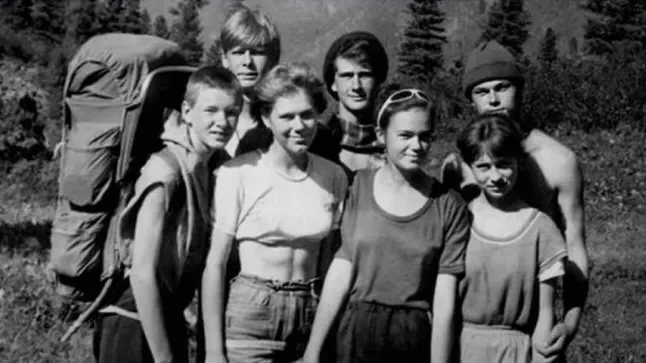
Lyudmila Ivanovna Korovina was 41 years old in 1993. She was an experienced hiking instructor from Petropavl, Kazakhstan, and was associated with the Azimut tourist club. Russian sources frequently describe her as a Master of Sports in hiking and as a leader with extensive mountain experience.
The hikers who died were 24-year-old Tatyana Filipenko, 23-year-old Aleksander Krysin, 19-year-old Denis Shvachkin, 16-year-old Viktoriya Zalesova, 15-year-old Timur Bapanov, and Korovina herself. Valentina Utochenko, who survived, was 17 years old.
The expedition took place during a period when organized long-distance hiking routes were common throughout the former Soviet Union. Korovina's group was not made up of inexperienced tourists. The participants had trained for demanding routes and were accustomed to her leadership style.
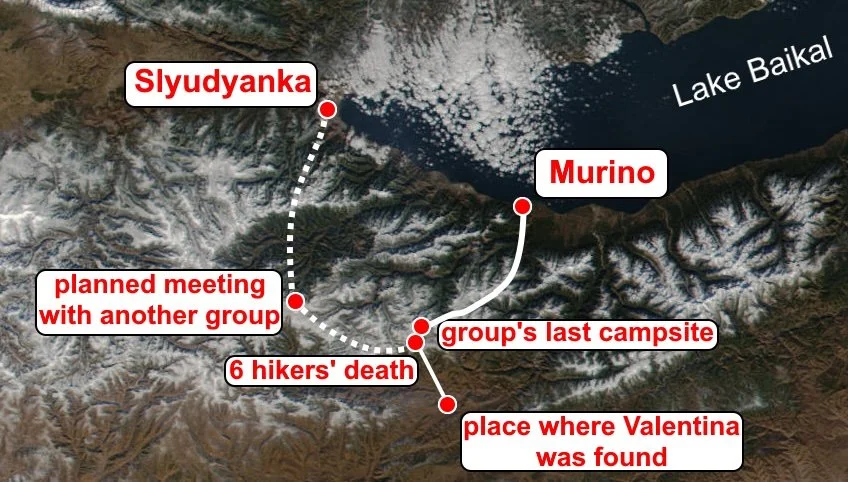
Korovina's daughter, Natalia, was reportedly leading a separate hiking group elsewhere in the region. The two groups planned to meet during their routes, but contact was never made.
Sources differ on the precise location of the incident. Some accounts place the group near Kang-Ula, while others identify Mount Tritrans or the area around Retranslyator Peak. All accounts place the tragedy within the Khamar-Daban range, a mountainous region known for rapidly changing weather, exposed ridgelines, and extensive hiking routes.
The group reportedly began its route near Murino and traveled through river valleys, mountain passes, and exposed terrain. The expedition was intended as a serious multi-day trek. The hikers carried food, tents, clothing, route documents, and other standard equipment for an extended journey. Korovina had led similar groups before, and the participants were familiar with her methods.
Rain, Wind, and the Exposed Slope
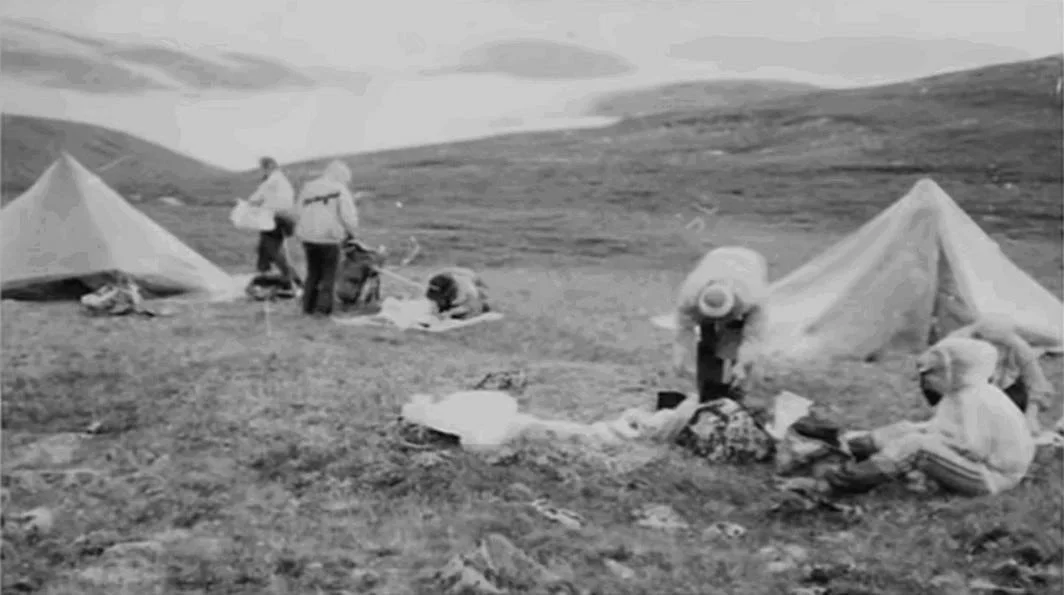
Weather conditions deteriorated during the expedition. Later reports and reconstructions describe several days of cold rain, wet snow, and strong winds. Clothing and equipment became soaked, and maintaining fires became increasingly difficult.
Starting a fire in the Khamar-Daban range can be challenging in wet conditions. After several days of rain, fuel would have been difficult to gather and dry. The group's clothing, tents, and gear remained exposed to repeated moisture.
The hikers reportedly made good progress early in the trip before conditions worsened. By August 4, they were traveling across exposed high ground. Some reconstructions place them near the slopes of Mount Tritrans or Retranslyator Peak, where forested terrain lay below them and a relay structure may have been located at higher elevation.
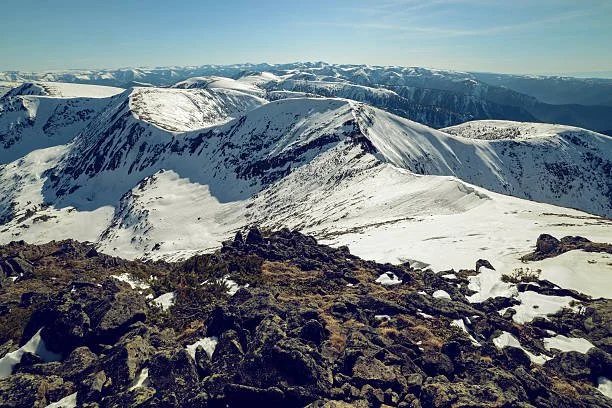
Former rescuers and later researchers described the area as largely open terrain consisting of rock, grass, and exposed slopes with little protection from wind and precipitation.
Descending into the forest could have provided fuel, shelter from the wind, and opportunities to dry equipment. Reaching a nearby structure may also have offered protection. Instead, the group remained on the exposed slope. The reasons are uncertain, but later reconstructions have suggested exhaustion, poor visibility, worsening weather, navigational difficulties, or a decision to stop before continuing the route.
Researcher Vladimir Zharov later retraced the route and concluded that fatigue, wet clothing, poor weather, and inadequate caloric intake played a significant role in the group's condition. He argued that the hikers reached the exposed slope after several days of cold and rain with far less physical reserve than they realized.
During the night, the group reportedly struggled with fire and shelter. Cold rain and snow continued across the mountains. By the morning of August 5, the hikers had spent several days exposed to cold, wind, and wet conditions while expending large amounts of energy to stay warm.
They prepared to continue the route.
According to Valentina Utochenko's account, Aleksander Krysin was the first member of the group to collapse.
The Deaths on the Mountain
Valentina Utochenko's testimony provides the primary account of the group's final hours. Different versions of her story vary in detail, but the general sequence remains consistent across interviews, summaries, and later retellings.
According to Utochenko, Aleksander Krysin suddenly became ill. Some accounts describe him screaming, foaming at the mouth, or bleeding from the ears or face before collapsing. He died shortly afterward.
Korovina went to assist him and then collapsed herself.
Many summaries list her cause of death as heart failure or cardiac arrest. Other accounts describe her experiencing severe distress immediately after Krysin's collapse. By that point, she had spent several days in deteriorating weather while leading a group of teenagers through difficult conditions.
Following the deaths of Krysin and Korovina, the remaining members of the group became increasingly disorganized.
Utochenko later described panic, confusion, and erratic behavior among the hikers. Tatyana Filipenko was reported to have clawed at her throat or struck her head against rocks. Denis Shvachkin reportedly attempted to hide or fled from the group. Viktoriya Zalesova and Timur Bapanov also became disoriented or ran from the immediate area. Some versions of the account describe hikers removing clothing, rolling on the ground, or collapsing after displaying similar symptoms.
Utochenko and one of the male hikers reportedly attempted to move away from the area with essential supplies, but he also collapsed.
Utochenko eventually left the slope alone. She carried a sleeping bag and descended toward the forest, where she spent the night.
The following day, she returned to the site, gathered supplies, and continued searching for a route out of the area. According to some accounts, she followed utility lines associated with a relay tower before reaching the Snezhnaya River. She then followed the river until she encountered other travelers.
Several accounts state that kayakers found her after she had spent days moving through the region alone. Those who encountered her described her as exhausted, traumatized, and struggling to explain what had happened.
Authorities were notified, and rescue operations began.
The Recovery and Autopsy Findings

Search teams eventually located the bodies on the mountainside. By the time they arrived, weather, wildlife, and the passage of time had altered the scene. Several accounts state that some of the hikers were missing outer layers of clothing and that some were found barefoot or partially dressed.
The bodies were transported to Ulan-Ude for examination. Most summaries of the case state that five of the hikers died from hypothermia, while Korovina's death was attributed to heart failure or cardiac arrest. Other reports mention fluid accumulation in the lungs, signs of exhaustion, lung damage, or protein deficiency in muscle tissue.
Hypothermia and physical depletion appear consistently in Russian-language discussions of the incident. Korovina's reported heart failure is often presented either as a separate cause of death or as a complication of the same conditions affecting the rest of the group.
Questions about the official findings stem largely from Utochenko's description of the group's final hours. Her account includes symptoms that many readers associate with poisoning or sudden medical collapse rather than prolonged exposure to cold. However, public access to official records has been limited. Much of the information available today comes from media reports, rescuer recollections, television interviews, translated articles, and later reconstructions rather than a complete publicly available case file.
The incident has frequently been compared to the Dyatlov Pass tragedy because both cases involved experienced hikers, severe weather, unusual behavior before death, partially clothed bodies, and official explanations that many observers considered incomplete.
There are also significant differences between the two incidents. The Khamar-Daban case had a surviving witness, the bodies were found relatively close together, and the physical injuries reported were less severe than those associated with the Dyatlov group. In addition, the weather conditions preceding the Khamar-Daban deaths are documented in many accounts and provide a direct explanation for prolonged exposure.
Hypothermia and Exhaustion
The official explanation centers on hypothermia, exhaustion, and prolonged exposure to wet, cold conditions.
The group had spent several days hiking through rain, wet snow, and strong winds. Their clothing and equipment were reportedly soaked, and they struggled to maintain fires. They remained on exposed terrain rather than reaching forest cover or shelter. Some researchers have also suggested that their food supplies may not have been sufficient to replace the calories they were burning in the cold.
Hypothermia can develop in temperatures above freezing when rain, wind, and exhaustion cause the body to lose heat faster than it can produce it. Once clothing becomes saturated and energy reserves begin to decline, physical performance and judgment deteriorate. Decision-making becomes more difficult, movement slows, and coordination suffers.
Advanced hypothermia can produce confusion, irrational behavior, impaired judgment, and paradoxical undressing, a phenomenon in which individuals remove clothing despite dangerously low body temperatures. These symptoms have been cited as a possible explanation for why some of the hikers were found without outer garments or footwear.
The theory is consistent with the documented weather conditions, the exposed terrain, the condition of the bodies, and the findings reported after the autopsies. It is also supported by later analyses from researchers such as Vladimir Zharov and Yuri Golius, both of whom emphasized exposure and physical exhaustion.
The primary challenge for this explanation is the speed and severity of the symptoms described by Utochenko. Reports of foaming at the mouth, bleeding, throat-clawing, and rapid collapse are not commonly associated with the public image of death from exposure. Some researchers have argued that these details may reflect the effects of panic, trauma, memory distortion, translation issues, or secondary medical complications occurring alongside hypothermia.
Others have suggested that severe exposure may have been accompanied by pulmonary edema, respiratory distress, vomiting, or collapse after prolonged exertion.
Despite ongoing debate, hypothermia and exhaustion remain the explanation most closely aligned with the documented weather conditions and official findings.
Pulmonary Edema and Mountain Illness
Valentina Utochenko has reportedly expressed support for the idea that pulmonary edema may have played a role in the deaths.
Pulmonary edema occurs when fluid accumulates in the lungs, making breathing difficult and sometimes producing frothy sputum or foam around the mouth. The condition can develop in several circumstances, including heart failure, severe hypothermia, infection, poisoning, drowning, and high-altitude illness.
Some discussions of the case focus on high-altitude pulmonary edema, a condition associated with mountain environments. Symptoms can include shortness of breath, weakness, confusion, coughing, respiratory distress, and collapse.
The elevations commonly cited for the Khamar-Daban incident range from approximately 2,300 to 2,400 meters. While altitude tolerance varies between individuals, these elevations are generally lower than those most commonly associated with severe high-altitude pulmonary edema.
The timing of the event also presents difficulties for a pure altitude-sickness explanation. The group had already spent time in the region, and six people developing severe pulmonary complications almost simultaneously at that elevation would be unusual.
Pulmonary edema associated with hypothermia, cardiac stress, or prolonged physical exhaustion is often considered a more plausible possibility. Korovina's reported cardiac failure is relevant to this discussion, as severe cold, stress, sleep deprivation, and physical exertion can place significant strain on the cardiovascular system.
Pulmonary edema may help explain reports of respiratory distress, foaming at the mouth, and some of the findings involving the lungs. Most researchers who consider it a factor view it as part of a broader medical collapse associated with exposure rather than as a complete explanation by itself.
Poisoning from Plants, Mushrooms, or Food
Poisoning theories remain among the most frequently discussed alternatives to hypothermia.
These theories draw support from symptoms described in some versions of Utochenko's testimony, including convulsions, foaming at the mouth, confusion, panic, and sudden collapse. Some accounts also state that the group collected golden root, or rhodiola, before the incident, leading to speculation that a toxic plant or mushroom may have been consumed accidentally.
Certain poisonous mushrooms can produce vomiting, diarrhea, hallucinations, convulsions, respiratory distress, liver damage, coma, or death. Toxic plants can also affect the nervous system, heart rhythm, or respiratory function.
A poisoning event could explain why multiple members of the group became ill during the same period, particularly if they consumed the same meal. It could also account for disorientation and unusual behavior.
The available evidence for this explanation is limited. Publicly available information does not include preserved food samples, toxicology reports identifying a specific substance, or documentation of a confirmed poisoning source.
Valentina Utochenko survived despite participating in the same expedition and likely consuming much of the same food. While individual exposure levels can vary, her survival complicates theories involving a shared toxic meal.
The timeline also presents challenges. Many forms of mushroom poisoning produce symptoms over hours or days rather than causing immediate collapse. Other toxic species can produce neurological symptoms, but available accounts do not establish a clear match between reported symptoms and a specific toxin.
Poisoning remains a possibility, but the evidence supporting exposure to cold and exhaustion is substantially stronger.
Contaminated Water
Some theories focus on the possibility that the hikers drank contaminated water during the expedition.
Under this scenario, multiple members of the group would have been exposed to the same source, potentially producing illness within a relatively short period of time. Certain contaminants can cause neurological symptoms, respiratory distress, cardiac complications, seizures, vomiting, or collapse.
The theory has been linked to broader discussions about environmental contamination in areas surrounding Lake Baikal and nearby industrial regions.
However, no publicly available investigation has identified a contaminated water source connected to the incident. Accounts of the expedition place the group in remote mountain terrain rather than near a known industrial discharge site. Public summaries also do not identify a specific toxin, contamination event, or confirmed exposure pathway.
As with food-poisoning theories, Utochenko's survival would require a significant difference in exposure level or individual response.
Contaminated water remains a possible explanation for a shared medical event, but there is little direct evidence supporting it.
Nerve Agent or Chemical Exposure
Chemical exposure theories are largely based on symptoms described in some versions of Valentina Utochenko's account, including foaming at the mouth, convulsions, respiratory distress, panic, and rapid collapse. These reports have led some writers to speculate that the hikers encountered a toxic substance, including military chemical agents.
Nerve agents can produce symptoms such as excessive salivation, sweating, vomiting, muscle spasms, convulsions, respiratory failure, loss of coordination, and death. In severe cases, victims may collapse within a short period of time.
A chemical exposure affecting multiple people could account for several members of the group becoming ill in the same area. However, there is no publicly available evidence that a nerve agent or other military chemical was released in the region. No official investigation identified chemical contamination, and no reports have documented similar incidents involving other hikers, rescuers, or local residents.
The location also presents difficulties for this theory. The Khamar-Daban range was a known hiking destination, and the incident occurred during the summer hiking season. Any chemical release in an area frequented by tourists would have carried a significant risk of affecting unintended targets.
Utochenko's survival creates additional problems for the theory. She returned to the site after spending the night in the forest and handled equipment belonging to the group. Search and recovery personnel later entered the area without reports of secondary poisoning.
Some supporters of the theory have suggested a short-lived toxic cloud or an isolated environmental exposure rather than a persistent contaminant. However, no specific source has been identified.
Without physical evidence of a chemical release, the theory remains speculative.
Infrasound, Wind, and Panic
Some discussions of the Khamar-Daban incident have focused on infrasound, a type of low-frequency sound below the normal range of human hearing.
Researchers studying mountain environments have proposed that strong winds moving across particular terrain features can produce pressure fluctuations and low-frequency vibrations. These effects have been linked to sensations of anxiety, discomfort, nausea, disorientation, and fear in some circumstances.
Supporters of this theory suggest that severe weather, exposed terrain, and physical exhaustion may have made the group more vulnerable to panic or impaired decision-making. If one member of the group suffered a medical emergency, fear and confusion could have spread rapidly among the remaining hikers.
The theory does not account for the deaths on its own. While infrasound has been proposed as a factor in psychological stress or disorientation, there is little evidence that it can directly cause the medical symptoms described in the case.
For that reason, infrasound is generally discussed as a possible contributing factor rather than a primary cause. Even those who consider it relevant typically combine it with hypothermia, exhaustion, environmental stress, or panic.
Avalanche, Rockfall, or Physical Injury
Avalanches, rockfalls, and accidental injuries have been proposed in some discussions of the incident, although these explanations receive less support than exposure-related theories.
The bodies were reportedly found relatively close together and were not buried beneath avalanche debris. Public summaries generally do not describe the severe traumatic injuries normally associated with a major avalanche or rockfall event.
The terrain itself presented hazards. Slips, falls, and impacts against rocks were possible, particularly if members of the group were exhausted, hypothermic, or disoriented. Some versions of Utochenko's account describe hikers striking their heads against rocks or falling during periods of confusion and panic.
Such injuries may have contributed to individual deaths or worsened existing medical problems. However, they do not provide a comprehensive explanation for the collapse of nearly the entire group.
Physical injuries are generally considered secondary factors rather than the primary cause of the disaster.
Animal Attack
Animal attacks are occasionally mentioned in discussions of the incident because the bodies were not recovered immediately and were exposed to wildlife after death.
Accounts of the recovery note that weather, scavengers, and natural decomposition had altered the scene before search teams arrived. These factors may have affected the appearance of the bodies and complicated later interpretation of the evidence.
There is no indication that an animal attack caused the deaths. Utochenko was present when the group collapsed, and her account does not describe an encounter with wildlife. Public summaries of the autopsy findings also do not report fatal wounds consistent with an attack.
Wildlife activity may have affected the condition of the bodies after death, but it does not explain the incident itself.
Homicide or Deliberate Harm
A number of theories propose that the hikers were killed by another person or group. Variations include criminal assault, military involvement, and accusations directed at individuals connected to the expedition.
These theories generally rely on the unusual symptoms described by Utochenko and the absence of a widely accepted explanation for the deaths.
Publicly available evidence provides little support for homicide. Reports do not identify a suspect, motive, or pattern of injuries consistent with a violent attack. There are no widely reported signs of robbery, struggle, or organized violence at the site.
Accusations directed at Utochenko have also appeared in some discussions of the case. These claims are not supported by known evidence. She was seventeen years old at the time of the incident, survived alone in difficult conditions, and later helped authorities locate the site.
Variations in her testimony over time are generally attributed to trauma, memory, translation differences, or the retelling of events across multiple decades rather than evidence of involvement in the deaths.
Among the major theories associated with the incident, homicide is one of the least supported by available evidence.
Negligence and Leadership Decisions
And some discussions of the incident focus on decisions made during the expedition and whether those decisions contributed to the outcome.
Korovina was known as a demanding instructor, and some later commentators argued that she pushed her groups too hard or failed to respond appropriately as weather conditions deteriorated. Researchers such as Yuri Golius emphasized hypothermia, exhaustion, and loss of physical strength as central factors in the disaster.
Several aspects of the expedition have received particular attention. The group remained on exposed terrain during severe weather, struggled with wet clothing and equipment, and may have been operating with limited food reserves after several days of difficult travel. Some later reconstructions suggest that forested terrain or potential shelter was available at lower elevations.
At the same time, evaluating decisions made during a mountain expedition is often difficult. Weather conditions can change rapidly, maps may be inaccurate, visibility can deteriorate, and options that appear obvious afterward may not have been apparent at the time.
Korovina was an experienced hiking instructor who had successfully led similar groups before. The expedition followed a registered route, and the participants were accustomed to demanding conditions.
Leadership decisions may have influenced where the group camped, how long they remained on exposed terrain, or when they chose to continue moving. However, those decisions took place within a broader context that included severe weather, exhaustion, wet equipment, and deteriorating physical condition.
The Survivor’s Memory

Valentina Utochenko's testimony remains the central source of information about the group's final hours.
At the time of the incident, she was seventeen years old. After witnessing the deaths of her companions, she spent days alone before reaching other travelers and authorities. She later gave interviews and statements that became the foundation for many later reconstructions of the event.
Different versions of her account contain noticeable differences. Some reports describe blood coming from the eyes, ears, or nose. Others focus primarily on foaming at the mouth, panic, and collapse. Accounts of her own condition when she was found also vary.
These inconsistencies are one reason the incident remains difficult to reconstruct. Trauma can affect memory, and later retellings often introduce changes through translation, editing, or repetition.
Despite those variations, several elements of Utochenko's account remain relatively consistent. In most versions, Aleksander Krysin collapses first, Korovina collapses shortly afterward, the remaining members of the group become disoriented or panic, and Utochenko eventually leaves the area alone before finding help.
Because she was the only survivor, her testimony remains an essential source even where details remain disputed.
What Probably Happened on Khamar-Daban?
The explanation most consistent with the available evidence combines hypothermia, exhaustion, prolonged exposure to wet conditions, physical depletion, and the breakdown of group cohesion following multiple medical emergencies.
The hikers spent several days in cold rain, wet snow, and strong winds. Their clothing and equipment became saturated, fire-making became difficult, and their bodies were forced to expend increasing amounts of energy to maintain core temperature. By the time they reached the exposed slope, they may already have been operating with reduced physical reserves.
According to Utochenko's account, Krysin collapsed first. Korovina collapsed shortly afterward. Whether those deaths resulted entirely from exposure or involved additional medical complications remains uncertain, but the loss of two key members of the group would have had an immediate effect on the remaining hikers.
Once panic, confusion, and physical exhaustion spread through the group, the chances of an organized descent decreased significantly. Utochenko survived after moving away from the exposed slope, spending the night in the forest, and continuing toward lower ground until she encountered other people.
Questions remain regarding the exact symptoms observed before the deaths and whether conditions such as pulmonary edema contributed to the collapse. Alternative theories involving poisoning, contaminated water, chemical exposure, or other external causes have been proposed, but none are supported by the same level of evidence as the documented weather conditions and official findings.
More than three decades later, the Khamar-Daban incident remains one of the most debated mountain disasters of the post-Soviet era. The available evidence points toward a combination of exposure, exhaustion, and medical collapse, but the absence of complete records and the unusual details reported by the sole survivor continue to generate discussion about exactly how the tragedy unfolded.
Want More?
If you’re drawn to dark history, old folklore, lost places, and unsolved mysteries, my books might be just what you’re looking for.
Start with A Vow for Breaking for Appalachian folk horror, family curses, and a house full of secrets — or A Dark Most Fair for a dark fairy tale about jealousy, longing, and a dangerous bargain with the fey.
Sources
De Abreu, Kristine. “Exploration Mysteries: The Khamar Daban Incident.” ExplorersWeb, 15 Nov. 2024.
Inform Polis Staff. “‘Не хватило сил’: Известный журналист рассказал о загадочной гибели туристов на бурятском перевале” [“‘They Didn’t Have Enough Strength’: A Well-Known Journalist Discussed the Mysterious Deaths of Tourists on the Buryat Pass”]. Inform Polis, 8 Aug. 2018.
Varsegova, Natalya. “Бурятский «перевал Дятлова»: Группа погибла в липком тумане?” [“Buryatia’s ‘Dyatlov Pass’: Did the Group Die in a Sticky Fog?”]. Komsomolskaya Pravda, 1 Mar. 2019.
Varsegova, Natalya. “Бурятский «перевал Дятлова»: Шесть туристов не окончили школу выживания” [“Buryatia’s ‘Dyatlov Pass’: Six Hikers Did Not Graduate from the School of Survival”]. Komsomolskaya Pravda, 23 July 2018.
Varsegova, Natalya. “Отчего погибли туристы на бурятском «перевале Дятлова»” [“Why the Hikers Died on Buryatia’s ‘Dyatlov Pass’”]. Komsomolskaya Pravda, 1 July 2018.
Varsegova, Natalya. “Тайна бурятского «перевала Дятлова»: В то жуткое утро выжившая Валя видела, как ее друзья умирали один за другим” [“The Mystery of Buryatia’s ‘Dyatlov Pass’: On That Terrible Morning, Survivor Valya Saw Her Friends Die One by One”]. Komsomolskaya Pravda, 28 Feb. 2019.
Zharov, Vladimir. “В Бурятии существует свой «перевал Дятлова»” [“Buryatia Has Its Own ‘Dyatlov Pass’”]. Inform Polis, 8 Mar. 2013.