Saint and Sinner: Gilles de Rais and Joan of Arc

On September 18, 1440, in Nantes, France, a worried mother gave sworn testimony before church officials.
Her ten-year-old son had not come home.
Neighbors said they had seen him taken by a man in a fine coat and led through the gate of a great lord’s residence.
The boy was never seen again.
The man accused was Baron Gilles de Rais, Marshal of France, one of the richest nobles in Europe, and a former companion-in-arms of Joan of Arc.
Within weeks, Gilles would face charges of murder, heresy, demonic invocation, and crimes against children. His name would become attached to one of the darkest criminal cases of the Middle Ages — and later, to the folklore shadow behind Bluebeard.
Before that, he had ridden beside a saint.
Who Was Gilles de Rais?
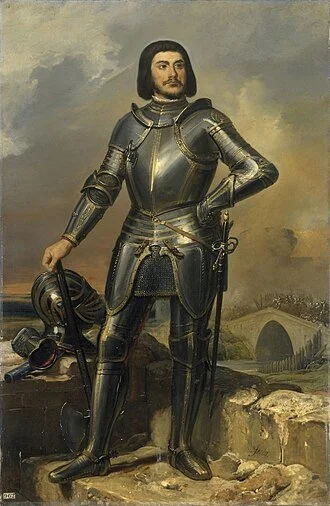
Gilles de Rais was born around 1404 into one of the wealthiest noble families in western France. He inherited lands, castles, military power, and access to the highest levels of French politics.
His holdings included estates in Brittany, Anjou, and Poitou, with major castles such as Machecoul, Tiffauges, and Champtocé. He and his younger brother René were orphaned young and raised under the influence of their grandfather, Jean de Craon, a powerful nobleman who taught Gilles how wealth, rank, and violence worked in fifteenth-century France.
By the time Gilles reached adulthood, he had money, soldiers, noble blood, and ambition.
France, meanwhile, was tearing itself apart.
The Hundred Years’ War had dragged on since 1337. English and French kings fought over the French crown. Burgundy had aligned with England. Paris was outside the Dauphin’s control. Much of northern France had been battered by raids, sieges, taxes, and famine.
By the late 1420s, the Dauphin Charles had a weak court at Chinon and a fragile claim to the throne.
Then a teenage girl from Domrémy arrived and changed the war.
Gilles de Rais and Joan of Arc
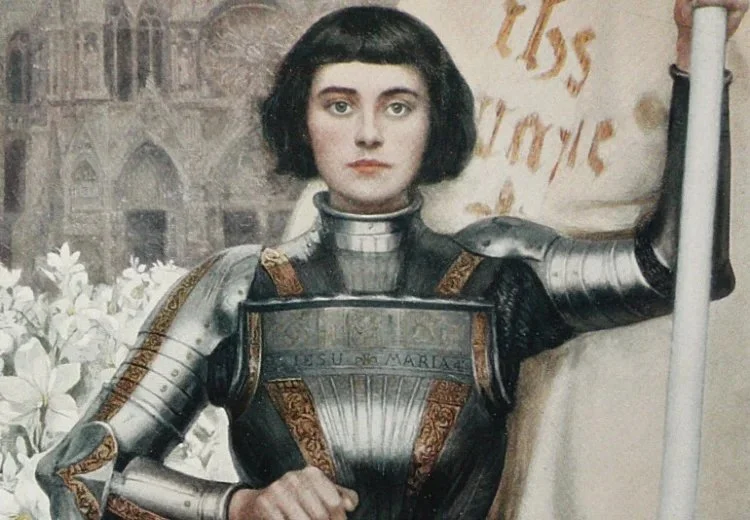
Joan of Arc was born around 1412 in Domrémy, a village affected by the violence of the war. As a teenager, she said Saint Michael, Saint Catherine, and Saint Margaret had commanded her to save France and lead Charles to his coronation.
In early 1429, she reached Chinon and persuaded Charles to let her join the campaign to relieve Orléans.
Gilles de Rais was part of the military world around her.
At Orléans, Joan helped change the course of the siege. On May 7, 1429, during the assault on Les Tourelles, she was wounded by an arrow between the neck and shoulder. She returned to the fight, and the French continued the attack. On May 8, the English withdrew.
That victory made Joan a symbol of divine favor for the French cause.
Gilles de Rais fought in the Loire campaign and rose with the momentum around her. On July 17, 1429, Charles VII was crowned at Reims. Soon afterward, Gilles received the rank of Marshal of France, one of the highest military honors in the kingdom.
For Gilles, this was the peak of public glory.
He had noble blood. He had wealth. He had battlefield prestige. He had proximity to the young woman many French people already saw as chosen by God.
That image would not last.
Paris, Capture, and Joan’s Death
After Reims, the French army turned toward Paris.
On September 8, 1429, Joan took part in the attack on the city. She was wounded in the thigh by a crossbow bolt, and the assault failed. The French withdrew.
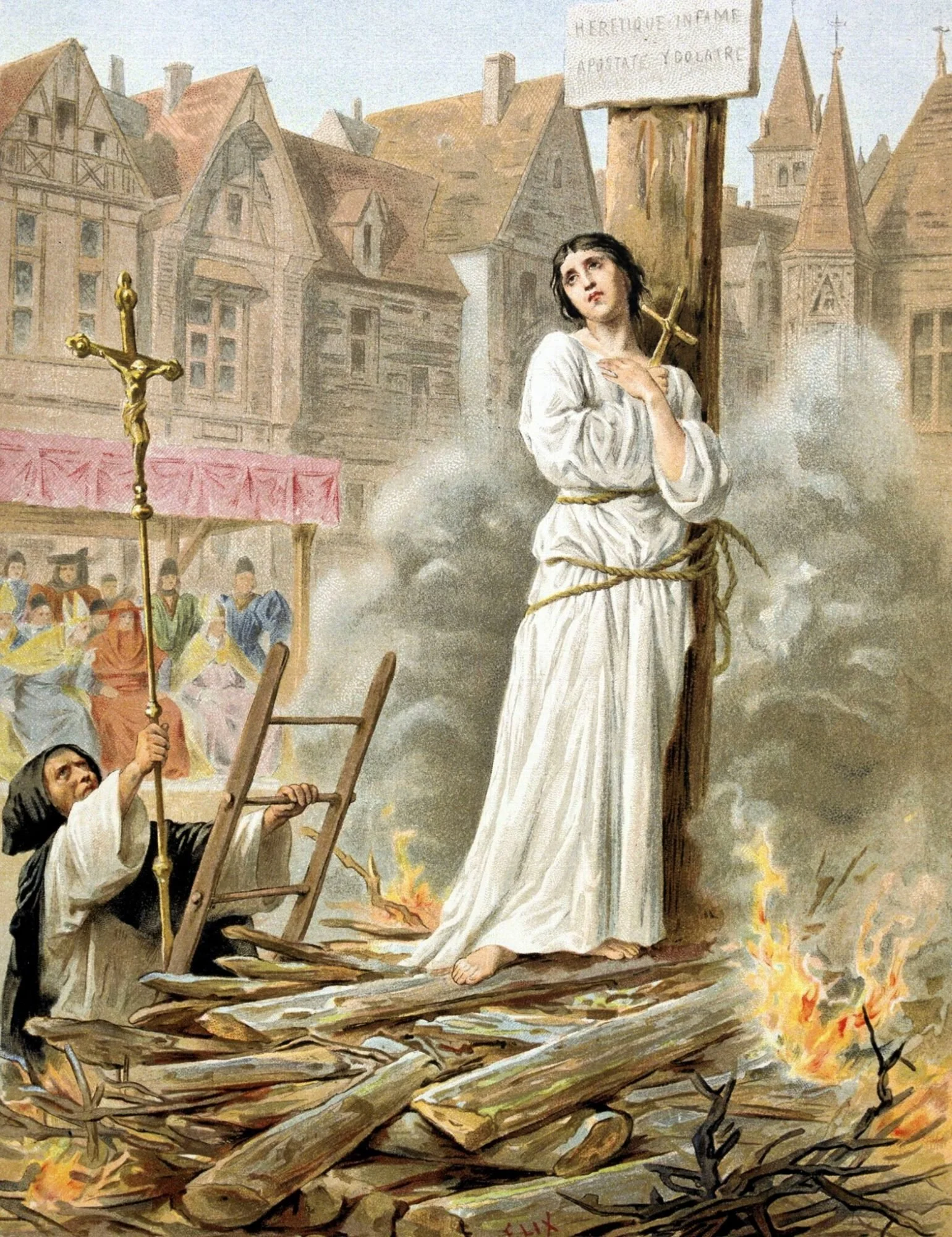
In May 1430, Joan was captured near Compiègne by Burgundian forces. She was later sold to the English and taken to Rouen, where Bishop Pierre Cauchon presided over her trial.
She was charged with heresy, including accusations tied to her visions, her refusal to submit her revelations to church authorities, and her wearing of men’s clothing.
On May 30, 1431, Joan was burned at the stake in Rouen. She was about nineteen years old.
Gilles de Rais was not documented as present at her capture, trial, or execution. He did, however, later spend enormous sums staging dramatic religious plays celebrating the siege of Orléans and Joan’s victories.
Those plays were expensive. Very expensive.
Gilles paid for costumes, actors, feasts, singers, clerics, pageantry, and lavish staging. He did not build a modest tribute to Joan. He built an extravagant public display that also advertised his own role in her glory.
That spending became one piece of his collapse.
The Richest Man in Brittany Goes Broke
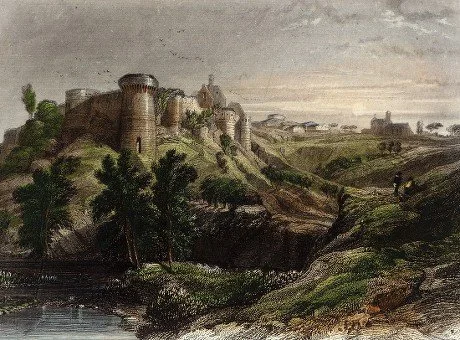
After Joan’s death, Gilles returned to his estates.
His grandfather died, removing one of the few older men who had been able to restrain him. Gilles began spending at a staggering rate.
He sold lands. He mortgaged castles. He funded chapels, musicians, clerics, military retainers, and religious theater. He bought spectacle.
His family grew alarmed enough that, in 1435, King Charles VII issued a decree restricting further sales of Gilles’s property. That meant his relatives believed he was burning through wealth so quickly that the family inheritance was in danger.
Gilles then turned harder toward alchemy.
Alchemy promised what he wanted most: more gold. He brought in occult practitioners, frauds, and men who claimed they could summon spirits or produce wealth through hidden arts. One of the most infamous was Francesco Prelati, who claimed he could summon a demon called Barron.
Gilles wanted money, power, and restoration.
He got debt, scandal, and witnesses.
Children Begin Disappearing
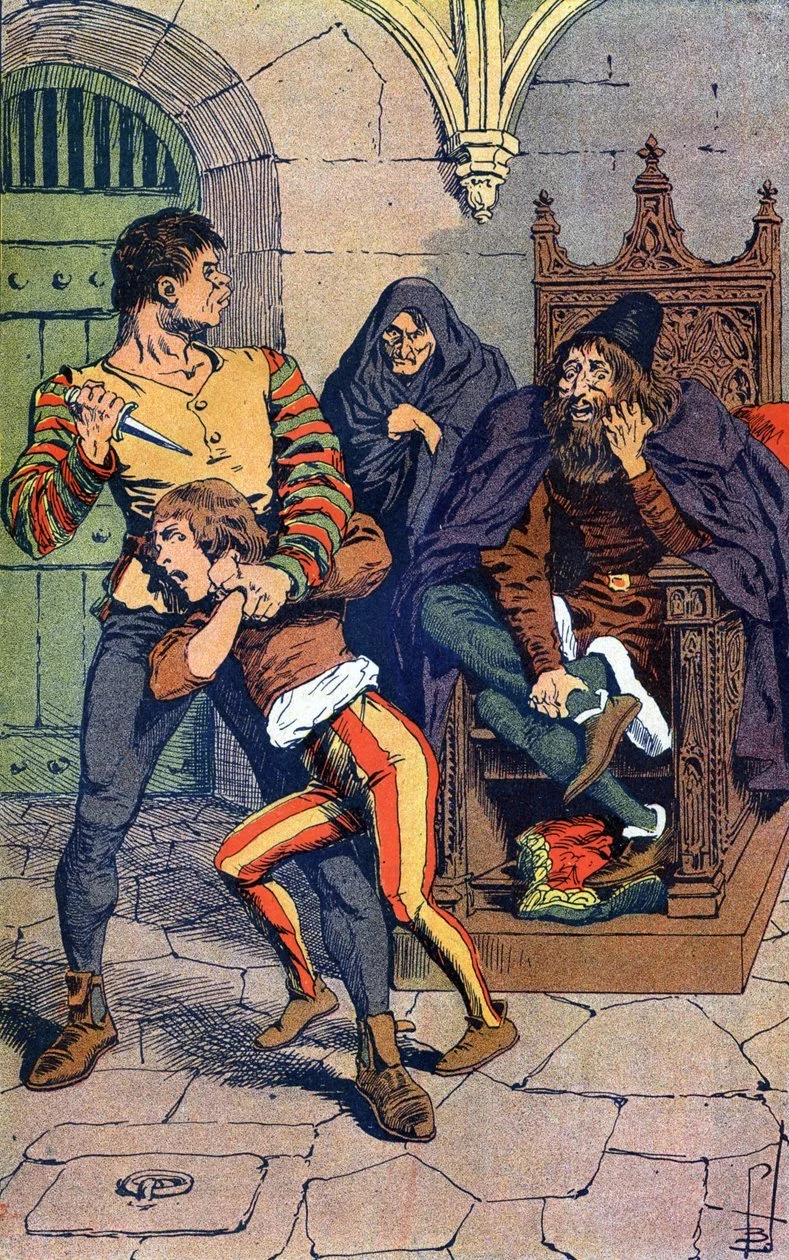
During these years, children began disappearing around the places connected to Gilles.
Parents and neighbors later testified that boys and girls had been lured from roads, fields, inns, taverns, and village spaces. Some were promised food, clothing, coins, or work in a noble household.
That promise would have meant something to poor families. Fifteenth-century peasants lived close to hunger, war, disease, and debt. A child chosen for service in a great household could bring home money or gain a better life.
But many of these children did not return.
Reports gathered around Gilles’s estates: Machecoul, Tiffauges, Champtocé, and other places where he traveled or maintained power. Parents complained. Rumors spread. Bodies and bones were reportedly found near castles, ditches, privies, and outbuildings over time.
The accusations did not move quickly through the courts.
Gilles was a great lord. The children were poor. Their families had almost no power against him.
That changed only after Gilles attacked the church.
The Church Opens an Inquiry
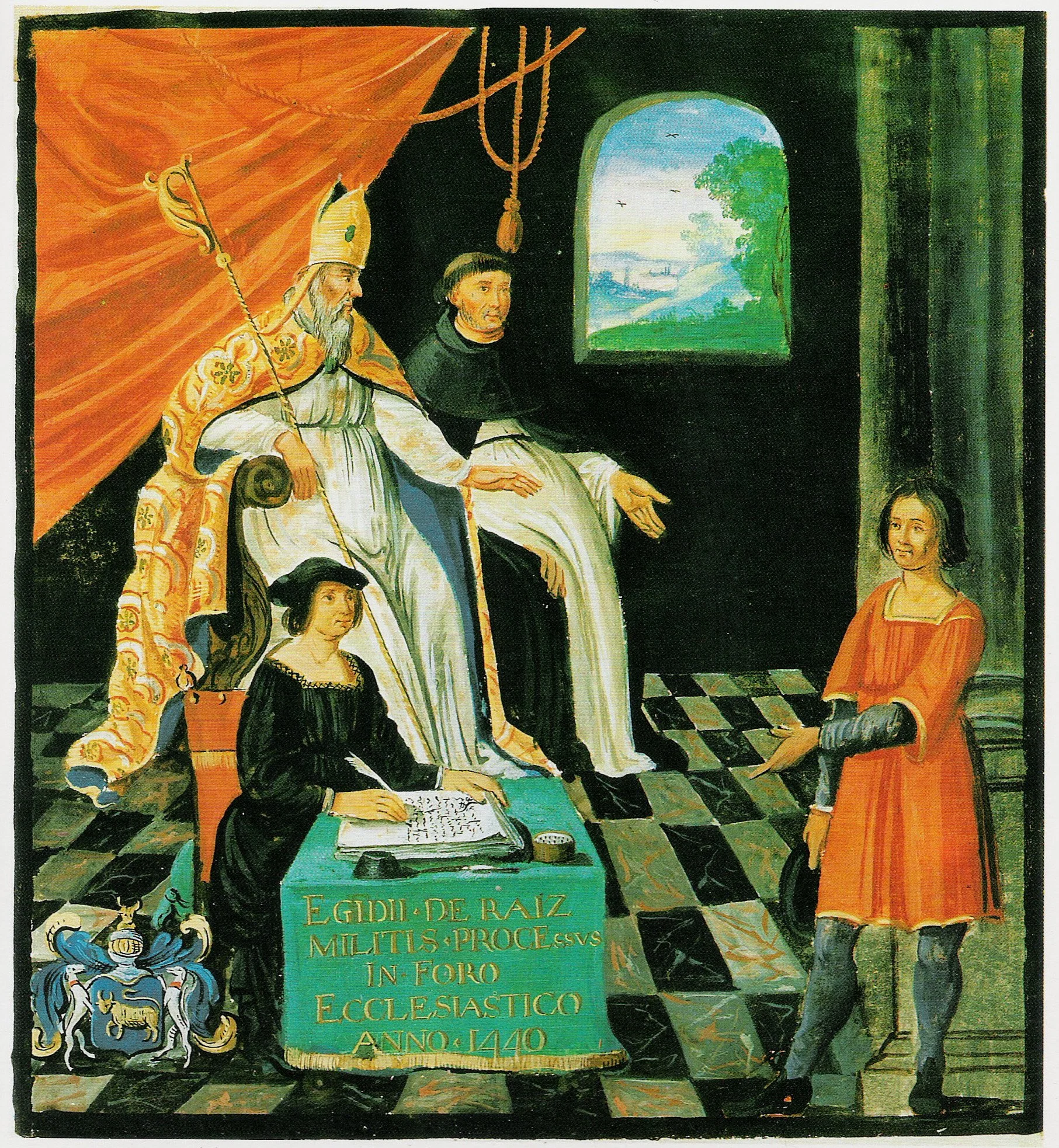
In May 1440, Gilles became involved in a property dispute connected to Saint-Étienne-de-Mer-Morte.
During that conflict, he seized a cleric in a church, an act that counted as sacrilege. That brought him directly into the authority of Bishop Jean de Malestroit of Nantes.
The bishop opened an inquiry.
Once church officials began taking testimony, the case expanded far beyond the seizure of a cleric. Witnesses came forward with accounts of missing children. Officials questioned families, neighbors, servants, and people who had seen children taken toward Gilles’s residences.
The Duke of Brittany’s officials also became involved.
By autumn 1440, Gilles de Rais faced two courts: an ecclesiastical court for heresy, sacrilege, and demonic invocation, and a secular court for abduction and murder.
His servants Henriet and Poitou were arrested as well. They were accused of helping him procure victims and dispose of remains.
The Charges Against Gilles de Rais
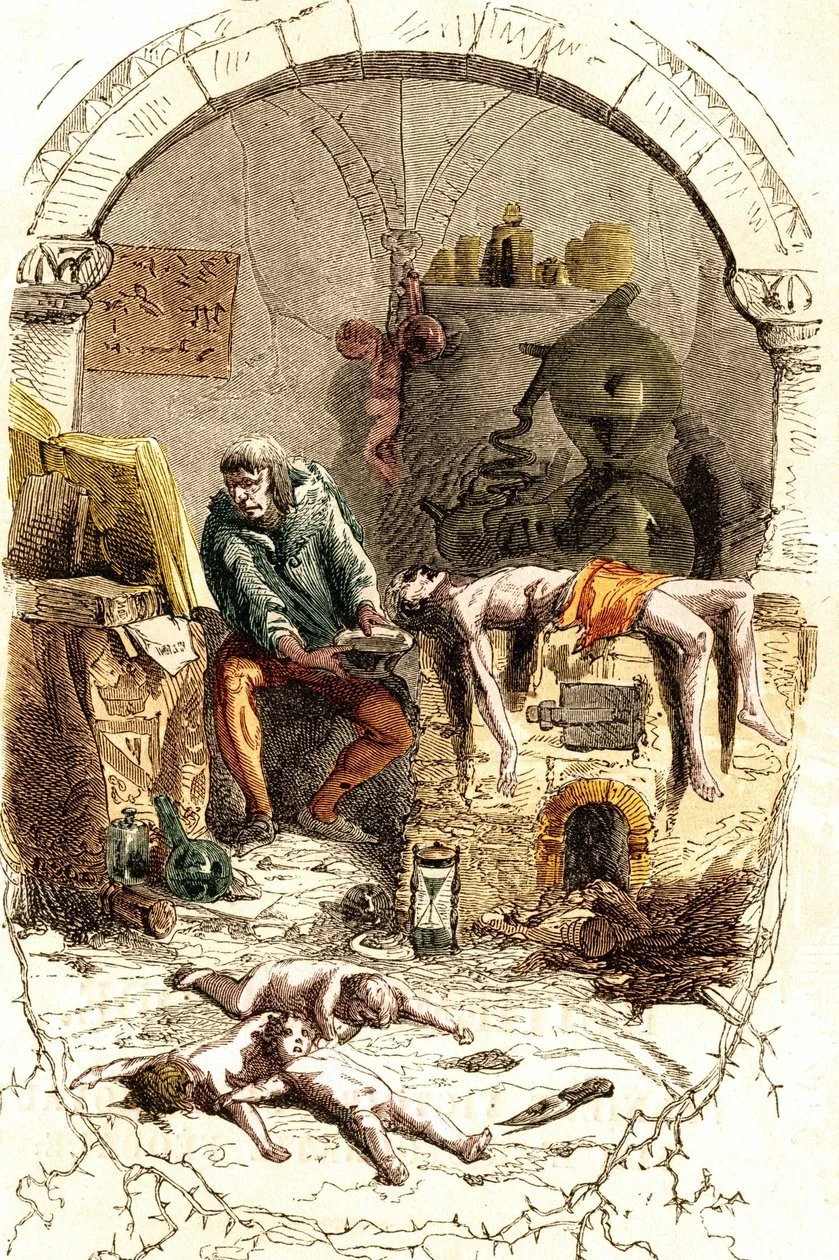
The accusations against Gilles de Rais were severe.
He was charged with abducting, sexually assaulting, and murdering children. He was also charged with attempting to summon demons and making pacts for wealth and power.
The number of alleged victims remains disputed. The ecclesiastical proceedings referred to 140 children or more. Later writers have claimed higher numbers, sometimes several hundred, but those figures are much harder to prove.
The safest phrasing is this: Gilles was tried and executed for the abuse and murder of many children, and the exact number remains unknown.
His confession included horrific details. He admitted to crimes against children and to occult practices. His servants also gave damaging testimony.
Some modern writers have argued that Gilles may have been framed by political enemies who wanted his lands and wealth. That argument usually points to the use of torture, the value of his estates, and the interests of the Duke of Brittany and the church.
The problem is that the accusations did not come from one convenient enemy. They came from many families, many locations, and multiple years of complaints. The trial was shaped by medieval power, church authority, and coercive justice, but the witness testimony cannot be brushed away as nothing.
Gilles confessed.
Whether he confessed every literal detail truthfully is a separate question.
Was Gilles de Rais Innocent?
The innocence argument has never disappeared.
In 1992, a mock retrial in Paris declared Gilles not guilty, which generated headlines and revived public debate. That proceeding had no legal power, but it helped push a modern version of the case: Gilles as a ruined nobleman framed by church and political authorities.
There are real reasons to approach the trial carefully.
Medieval courts used torture. Confessions under threat are dangerous evidence. Heresy charges could be politically useful. Gilles had property others wanted. The church and the Duke of Brittany both benefited when he fell.
But the case against him does not rest only on a single confession.
Parents testified that their children vanished after contact with Gilles’s household. Servants gave accounts of the crimes. The accusations followed him across multiple residences. Physical remains had reportedly been found in places connected to his estates before the trial reached its final stage.
That makes a simple frame-up hard to accept.
The most cautious answer is also the strongest one: Gilles de Rais was convicted in 1440 after extensive testimony and his own confession, but the exact number of victims and some details of the case remain disputed.
Execution in Nantes
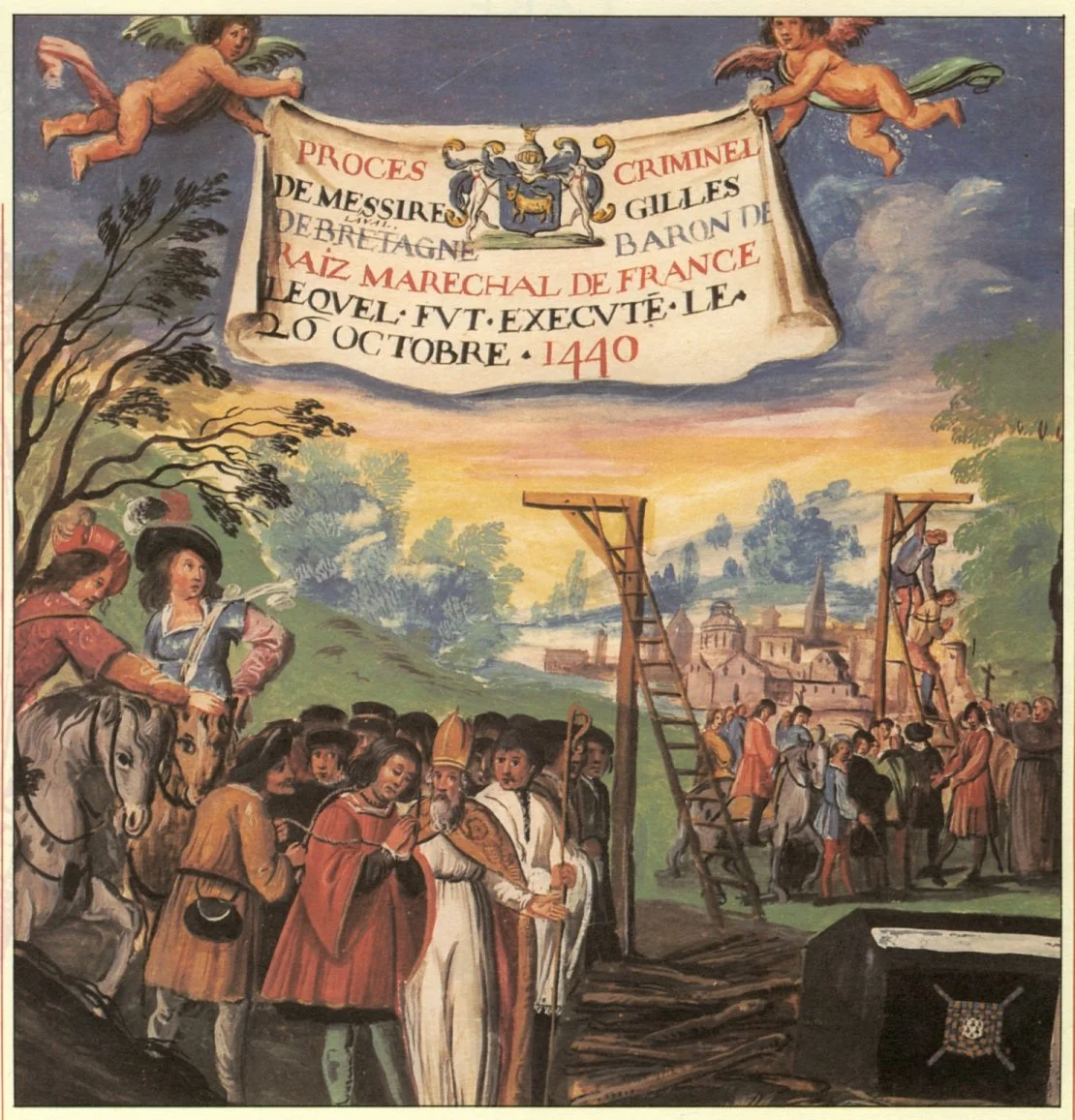
Gilles de Rais was executed on October 26, 1440, in Nantes.
He was hanged and then burned. His servants Henriet and Poitou were executed as well.
Gilles had once been Marshal of France. He had fought beside Joan of Arc. He had helped the French war effort during one of the most famous campaigns of the Middle Ages.
He died condemned as a murderer, heretic, and child killer.
Gilles de Rais and Bluebeard
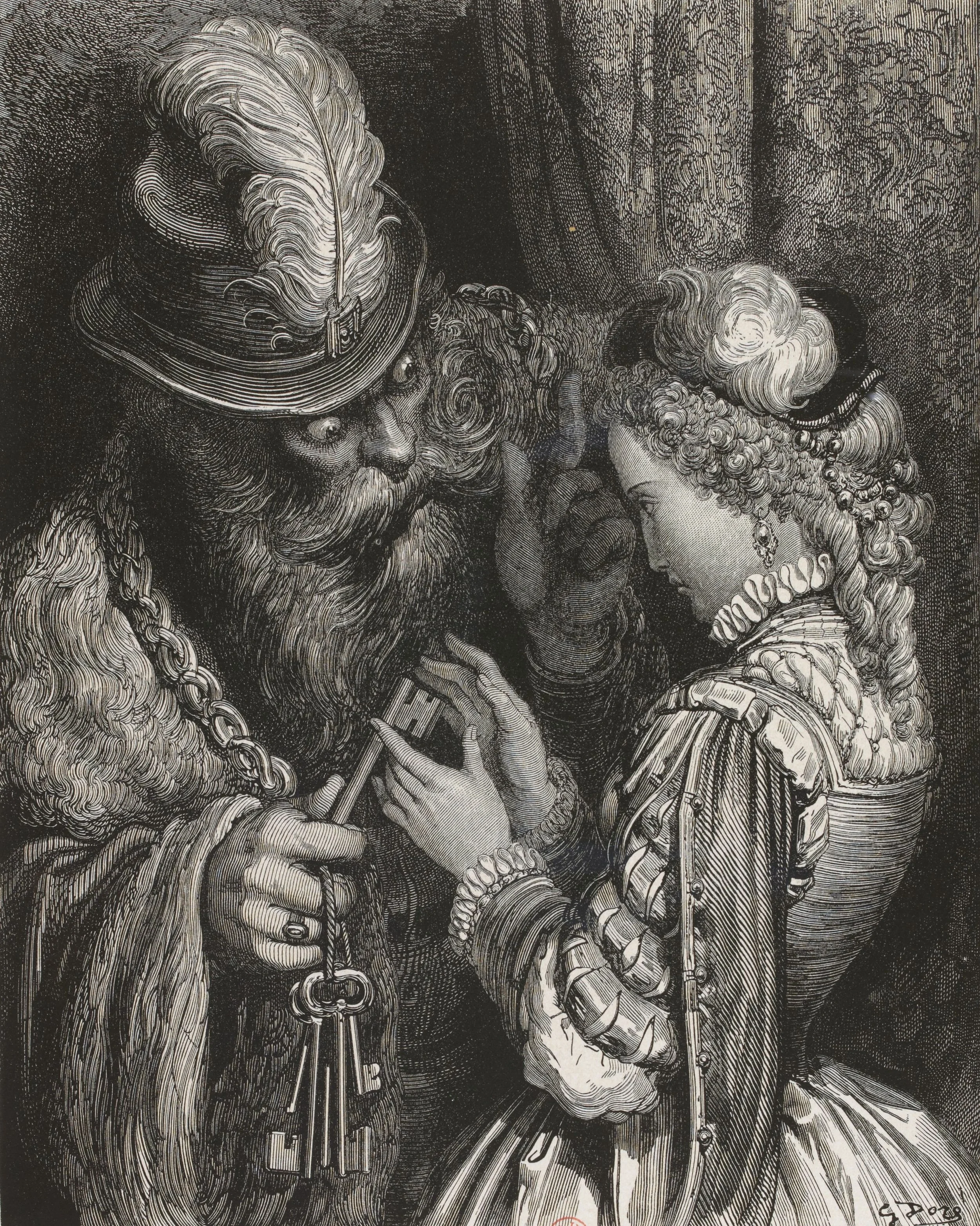
Gilles de Rais is often linked to the fairy tale Bluebeard.
The connection makes sense on the surface. Bluebeard is a wealthy, frightening lord with a hidden chamber and murdered victims. Gilles was a wealthy Breton nobleman whose name became attached to secret crimes, castles, and death.
But the link should be handled carefully.
Charles Perrault published Bluebeard in 1697, more than two centuries after Gilles’s execution. Folklorists and cultural historians have connected Bluebeard to several possible influences, including Gilles de Rais and Conomor of Brittany. The tale also belongs to a much wider folklore tradition about dangerous husbands, forbidden rooms, and women discovering hidden violence.
So Gilles de Rais may have influenced the Bluebeard tradition.
He was not the only possible source.
The folklore lasted because the fear at the center of Bluebeard was older than any one man: a powerful husband, a locked room, and the truth waiting behind the door.
The Saint and the Sinner
The dark pull of Gilles de Rais comes from the contrast.
He rode with Joan of Arc, one of the most famous saints in Christian history. He rose to Marshal of France. He spent fortunes staging plays that linked his name to her victories.
Then families came forward and named him in the disappearance of their children.
The saint and the sinner were not opposites in two different worlds.
For a brief moment in fifteenth-century France, one could not be seen without the other.
Want More?
You can listen to a full deep dive of this topic on the Time and Tales Podcast, now!
Also…
If you’re drawn to dark history, old folklore, lost places, and unsolved mysteries, my books might be just what you’re looking for!
Start with A Vow for Breaking for Appalachian folk horror, family curses, and a house full of secrets — or A Dark Most Fair for a dark fairy tale about jealousy, longing, and a dangerous bargain with the fey.
Sources
Bataille, Georges. The Trial of Gilles de Rais. Translated by Richard Robinson, Amok Books, 2004.
Famous Trials. “The Trial of Gilles de Rais, 1440.” Famous Trials, University of Missouri-Kansas City School of Law.
Famous Trials. “The Joan of Arc Trial: A Chronology.” Famous Trials, University of Missouri-Kansas City School of Law.
Jones, Christine A. “Revisiting Charles Perrault’s Iconic ‘Bluebeard’ Serial Killer in the Age of #MeToo.” Utah State University DigitalCommons, 2024.
Pernoud, Régine, and Marie-Véronique Clin. Joan of Arc: Her Story. Translated by Jeremy duQuesnay Adams, St. Martin’s Press, 1998.
Sargent, Jessie. “Bluebeard Gothic as Queer Folkloric Tradition.” The Macksey Journal, vol. 3, 2022.
Webster, Paul. “Rehabilitation of France’s Bluebeard.” The Guardian, 17 June 1992.
Wolf, Leonard. Bluebeard: The Life and Crimes of Gilles de Rais. Clarkson Potter, 1980.