The Mysterious Death of Edgar Allan Poe
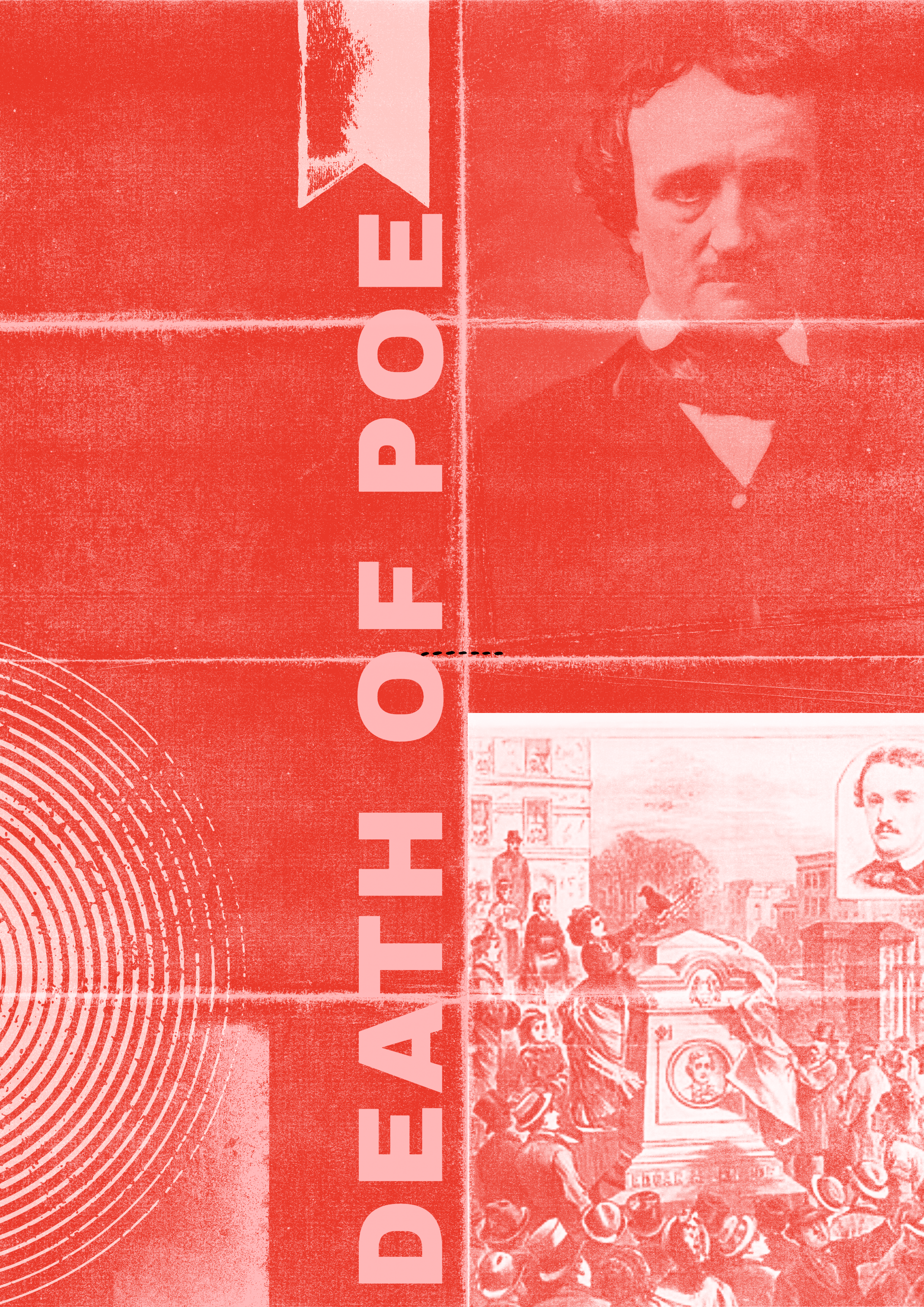
Baltimore. October 3, 1849.
Gunner’s Hall is crowded with voters and ward runners. It’s Fourth Ward election day: loud, chaotic, and thick with the smell of spilled ale and wet wool.
Near midday, printer Joseph W. Walker steps outside the hall.
Against the brick wall, a man slumps in clothing that doesn’t fit him: a cheap alpaca coat, a soiled shirt, worn trousers, and a crushed palm-leaf hat.
Walker leans closer and asks his name.
The stranger says, faintly:
Edgar Allan Poe.
Walker moves inside, finds paper, and writes a hurried note:
“There is a gentleman, rather the worse for wear, at Ryan’s 4th ward polls, who goes under the cognomen of Edgar A. Poe, and who appears in great distress...”
By nightfall, Poe is in a hospital bed.
Four days later, he is dead.
Everything between his last known stop in Richmond and that Baltimore doorway has fed one of American literary history’s strangest unsolved mysteries.
Edgar Allan Poe Before the Mystery
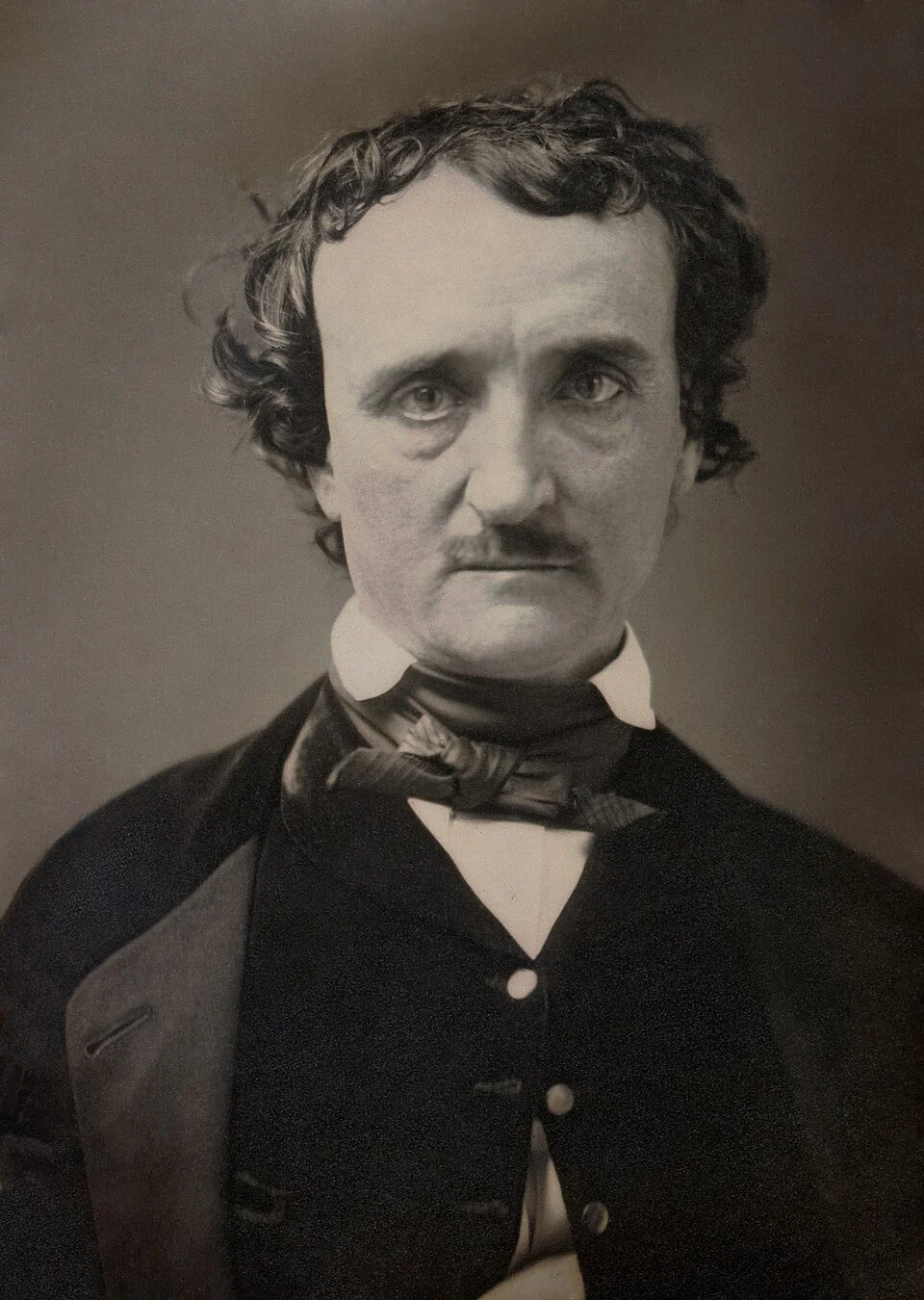
Edgar Allan Poe was born in Boston in 1809, the child of traveling actors.
By the age of three, both parents were dead. Poe was taken into the Richmond household of John and Frances Allan. He was never formally adopted, and his relationship with John Allan became one of the central wounds of his life: money, control, resentment, and dependence all tangled together.
By the 1830s and 1840s, Poe had become a known name in American magazines. He worked as an editor, critic, poet, and fiction writer in Richmond, Philadelphia, and New York.
His most famous work was already in print before his death: “The Fall of the House of Usher,” “The Masque of the Red Death,” “The Tell-Tale Heart,” “The Murders in the Rue Morgue,” and “The Raven.”
“The Raven” made him famous in 1845.
Fame did not make him secure.
Poe struggled with money for most of his adult life. His wife, Virginia Clemm Poe, died of tuberculosis in 1847. He still hoped to launch his own magazine, The Stylus, but the funding never came together.
Then, in the summer of 1849, something in his life seemed to shift.
Poe returned to Richmond. He lectured to strong audiences. He read “The Raven” to people who still wanted to hear it. He reconnected with Sarah Elmira Royster Shelton, a woman he had courted when they were young. The two became informally engaged.
He talked about marriage. He talked about returning to New York. He talked about editorial work.
This is the version of Poe who left Richmond in late September 1849: forty years old, broke more often than not, still writing, still working, still planning for a future.
Within ten days, he would be dead in Baltimore.
Poe Leaves Richmond

On September 27, 1849, Edgar Allan Poe left Richmond.
His plan was simple enough: travel to Baltimore, then Philadelphia, then New York. He had editing business to handle and personal plans to settle.
Friends described him as sober and composed when he departed. Several people who saw him in Richmond believed he looked healthier than he had in some time.
He carried a small trunk. He wore clothing people recognized as his own. He also had a malacca cane, given to him during his Richmond visit. That cane later became one of the last objects clearly tied to him before everything went wrong.
On September 28, Poe arrived in Baltimore.
Then five days disappeared.
There are no verified letters from Poe during that stretch. There is no confirmed hotel entry. There is no boardinghouse note that places him safely indoors. There is no clear witness trail from the moment he arrived in Baltimore to the moment Joseph Walker found him outside Gunner’s Hall.
For a man whose life has been studied down to receipts, letters, reviews, poems, debts, quarrels, and lectures, those five days are brutal.
Poe arrived in Baltimore on September 28.
He reappeared on October 3 in someone else’s clothes.
Gunner’s Hall and the Fourth Ward
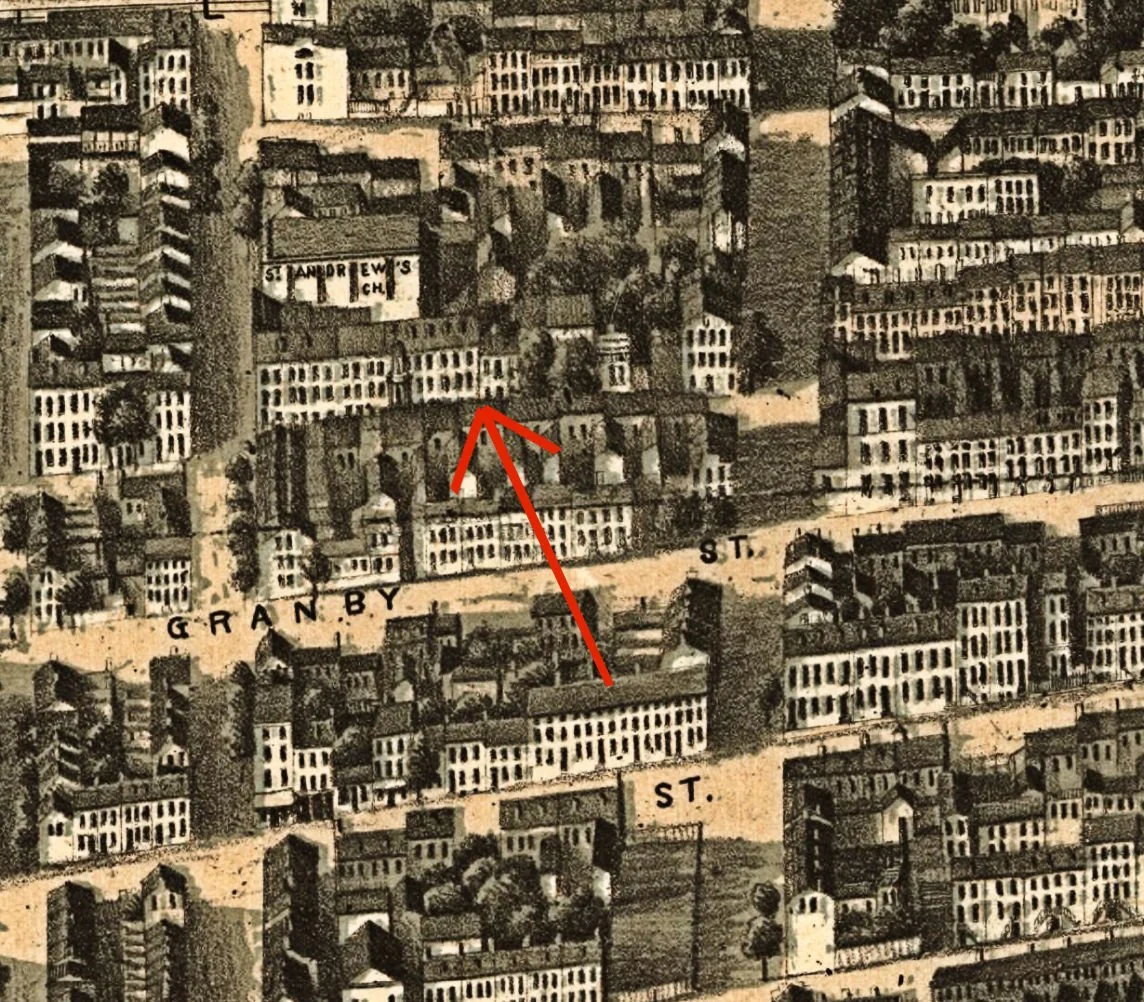
October 3 was election day in Baltimore.
That detail matters.
In the 1840s, polling places were not quiet civic spaces. Taverns often served as voting sites. Party operatives moved through the wards. Alcohol, intimidation, bribery, and violence all belonged to the political culture of the day.
Gunner’s Hall, also called Ryan’s Fourth Ward Polls, was one of those election-day sites.
That is where Joseph Walker found Poe.
Walker knew enough to send for help. He wrote to Dr. Joseph Evans Snodgrass, a physician and editor who had known Poe for years.
Snodgrass came to Gunner’s Hall with Henry Herring, Poe’s uncle by marriage. Both men later said Poe looked terrible. His face was dirty. His hair was disordered. His clothing was cheap, soiled, and badly fitted.
He did not look like the careful dresser they knew.
Snodgrass considered moving Poe somewhere he could rest. Herring wanted a hospital. A carriage was called, and Poe was taken to Washington College Hospital.
That decision put Poe’s final days almost entirely in the hands of Dr. John Joseph Moran.
Poe’s Final Days in the Hospital
Washington College Hospital was a small teaching hospital serving poorer neighborhoods in Baltimore.
Poe entered on October 3. He died there early on October 7.
Almost everything known about those days comes through Dr. Moran.
In Moran’s earlier descriptions, Poe moves between agitation, confusion, exhaustion, and brief periods of speech. He can answer questions, but he cannot explain where he has been or what happened to him. He is not lucid long enough to give a full account of the missing days.
Moran restricted visitors because he believed Poe was too excitable for company.
After Poe’s death, Moran wrote to Maria Clemm, Poe’s mother-in-law. In that letter, he gave Poe’s final words as:
“Lord help my poor soul.”
Later, Moran gave longer versions of Poe’s final days. Those later versions include extended scenes and dialogue absent from his earlier letters. Because of those differences, many historians treat Moran’s earliest descriptions as more useful than the later ones.
The official cause of death was vague. The contemporary notice listed “congestion of the brain,” a broad nineteenth-century phrase that could refer to many conditions.
There was no autopsy. A detailed hospital chart has not survived. A formal death certificate has not been found.
Poe died before he could explain what happened.
The Clothes That Weren’t His
The clothing remains one of the strangest parts of the case.
Friends remembered Poe as particular about dress when he had the money to manage it. Even during hard times, he generally tried to appear neat.
The outfit he wore at Gunner’s Hall did not match that habit.
The cheap alpaca coat, worn trousers, soiled shirt, and crushed palm-leaf hat looked wrong for him. They were not the clothes people remembered from Richmond.
His own clothing was gone.
So were several belongings. His trunk did not explain the missing days. The malacca cane, one of the last identifiable objects from Richmond, was no longer with him.
That clothing switch has fed several theories: robbery, assault, forced disguise, or election fraud.
One theory has become especially tied to Baltimore’s Fourth Ward.
Was Poe a Victim of Cooping?
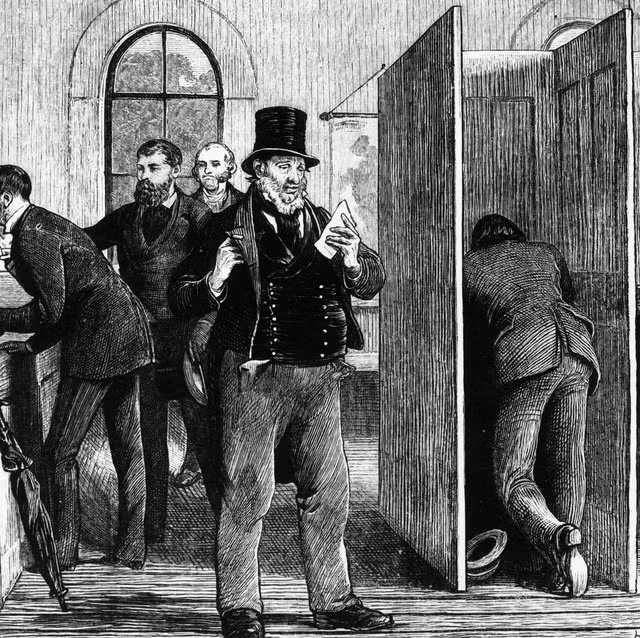
The most famous theory is cooping.
Cooping was a form of nineteenth-century election fraud. Victims could be kidnapped, confined, beaten, drugged, or forced to drink. Then they were taken from polling place to polling place and forced to vote repeatedly, sometimes in different disguises.
Baltimore politics in the 1840s had enough violence and fraud to make the theory plausible.
Poe was found on election day.
He was found at a polling place.
He was found disoriented.
He was wearing clothing that did not belong to him.
Those facts fit the basic shape of a cooping victim.
The theory also explains why he may have been redressed in cheap clothing. A cooping gang might change a victim’s outfit to send him back through another polling place under another identity.
But cooping does not explain everything.
It gives Poe a way into Gunner’s Hall. It does not give a firm medical cause for his death four days later. It also relies on circumstances rather than a named witness who saw him kidnapped or forced to vote.
Still, among the major theories, cooping remains one of the strongest because it connects the date, the location, the clothing, and the political violence of Baltimore.
Alcohol, Illness, and Injury
Alcohol has always followed the Poe death story.
Poe had a complicated relationship with drinking. Some people who knew him said he could become severely affected by small amounts. Others exaggerated his drinking after his death, especially those with reputations to protect or agendas to serve.
If Poe drank heavily during the missing days, alcohol could explain confusion, collapse, vulnerability, and poor judgment.
It does not explain the stranger’s clothing by itself.
Illness is another possibility. Poe may have suffered a stroke, infection, diabetic crisis, seizure disorder, encephalitis, or another medical emergency. “Congestion of the brain” could have covered several possibilities in 1849.
A head injury is possible, too. If Poe was robbed, assaulted, or dragged through election-day violence, a blow to the head could explain confusion and decline.
The difficulty is the same every time.
The paperwork that could settle the medical question does not exist. There is no autopsy. There is no complete daily chart. There is no detailed physical description from the first hospital examination that would allow modern doctors to test every theory against the body.
Poe’s symptoms point in several directions at once.
The Rabies Theory
In the 1990s, Dr. R. Michael Benitez proposed that Poe may have died of rabies.
The theory drew attention because Benitez approached the case as a medical diagnosis. He looked at reports of Poe’s agitation, confusion, periods of lucidity, and decline over several days.
Rabies can cause neurological symptoms, agitation, confusion, and death after symptoms appear. The theory seemed to fit parts of the hospital story.
But the rabies theory has problems.
It depends heavily on details from later descriptions of Poe’s final days, especially claims about hydrophobia, or fear of water. That symptom is not clearly supported in Moran’s earlier descriptions. In at least one early version, Poe drinks water.
Rabies remains possible.
It has never been proved.
Modern medicine can name possibilities. It cannot solve the case without stronger medical evidence.
Poe Dies in Baltimore
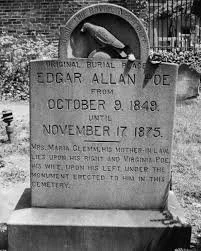
Edgar Allan Poe died in the early hours of Sunday, October 7, 1849.
He was forty years old.
On October 8, a small funeral was held at Westminster Presbyterian churchyard in Baltimore. The weather was cold and unpleasant. The service was brief. Only a few people attended, including Joseph Snodgrass, Judge Zaccheus Collins Lee, and members of Poe’s family circle.
Poe was buried without the kind of public honor his name would later command.
For years, his grave had no grand marker.
That changed in the 1870s. By then, Poe’s reputation had grown. Readers, writers, and teachers began calling attention to the neglected state of his grave.
Sara Sigourney Rice, a Baltimore schoolteacher and elocutionist, helped organize the effort to raise money for a proper monument. Donations came from students, teachers, and ordinary readers.
In 1875, Poe’s remains were moved to a new grave near the cemetery entrance. A monument was placed there. Later, Virginia Poe’s remains were moved from New York to be buried beside him. Maria Clemm’s name also became tied to the same plot.
The man who had received a quick burial in 1849 became a literary monument.
His final days remained unsolved.
So What Happened to Edgar Allan Poe?
The strongest answer is also the most frustrating one.
Poe left Richmond on September 27, 1849, with plans for work, travel, and marriage.
He reached Baltimore on September 28.
For five days, his movements cannot be traced with confidence.
On October 3, Joseph Walker found him at Ryan’s Fourth Ward Polls, disoriented, weakened, and dressed in clothing that did not belong to him.
He was taken to Washington College Hospital.
He died on October 7.
Cooping explains the election-day setting, the polling place, the disorientation, and the clothing. Alcohol could have made him vulnerable or worsened his condition. Illness or injury could explain the four-day decline. Rabies, stroke, infection, and other medical theories remain possible without enough proof to settle the case.
Poe helped shape the detective story.
His own death never received a resolution.
Want more?
You can listen to a full deep dive of this topic on the Time and Tales Podcast, now!
Also…
If you’re drawn to dark history, old folklore, lost places, and unsolved mysteries, my books might be just what you’re looking for!
Start with A Vow for Breaking for Appalachian folk horror, family curses, and a house full of secrets — or A Dark Most Fair for a dark fairy tale about jealousy, longing, and a dangerous bargain with the fey.
Sources
Benitez, R. Michael. “A Diagnosis of Rabies in Edgar Allan Poe.” Maryland Medical Journal, vol. 45, no. 9, 1996, pp. 765–769.
Edgar Allan Poe Society of Baltimore. “The Mysterious Death of Edgar Allan Poe.” The Edgar Allan Poe Society of Baltimore, 2024.
Edgar Allan Poe Society of Baltimore. “Fourth Ward Hotel and Gunner’s Hall.” The Edgar Allan Poe Society of Baltimore.
Edgar Allan Poe Society of Baltimore. “Poe’s Memorial Grave.” The Edgar Allan Poe Society of Baltimore.
Hayes, Kevin J. Edgar Allan Poe. Reaktion Books, 2009.
National Park Service. “The Mystery of Edgar Allan Poe’s Death.” National Park Service, 2021.
Smithsonian Magazine. “The (Still) Mysterious Death of Edgar Allan Poe.” Smithsonian Magazine, 7 Oct. 2014.
University of Maryland, Baltimore. “175 Years Later, Mystery Still Shrouds Poe’s Death.” CATALYST Magazine, 9 Dec. 2024.
Walsh, John Evangelist. Midnight Dreary: The Mysterious Death of Edgar Allan Poe. Rutgers University Press, 1998.