Olga of Kyiv: Fire and Blood
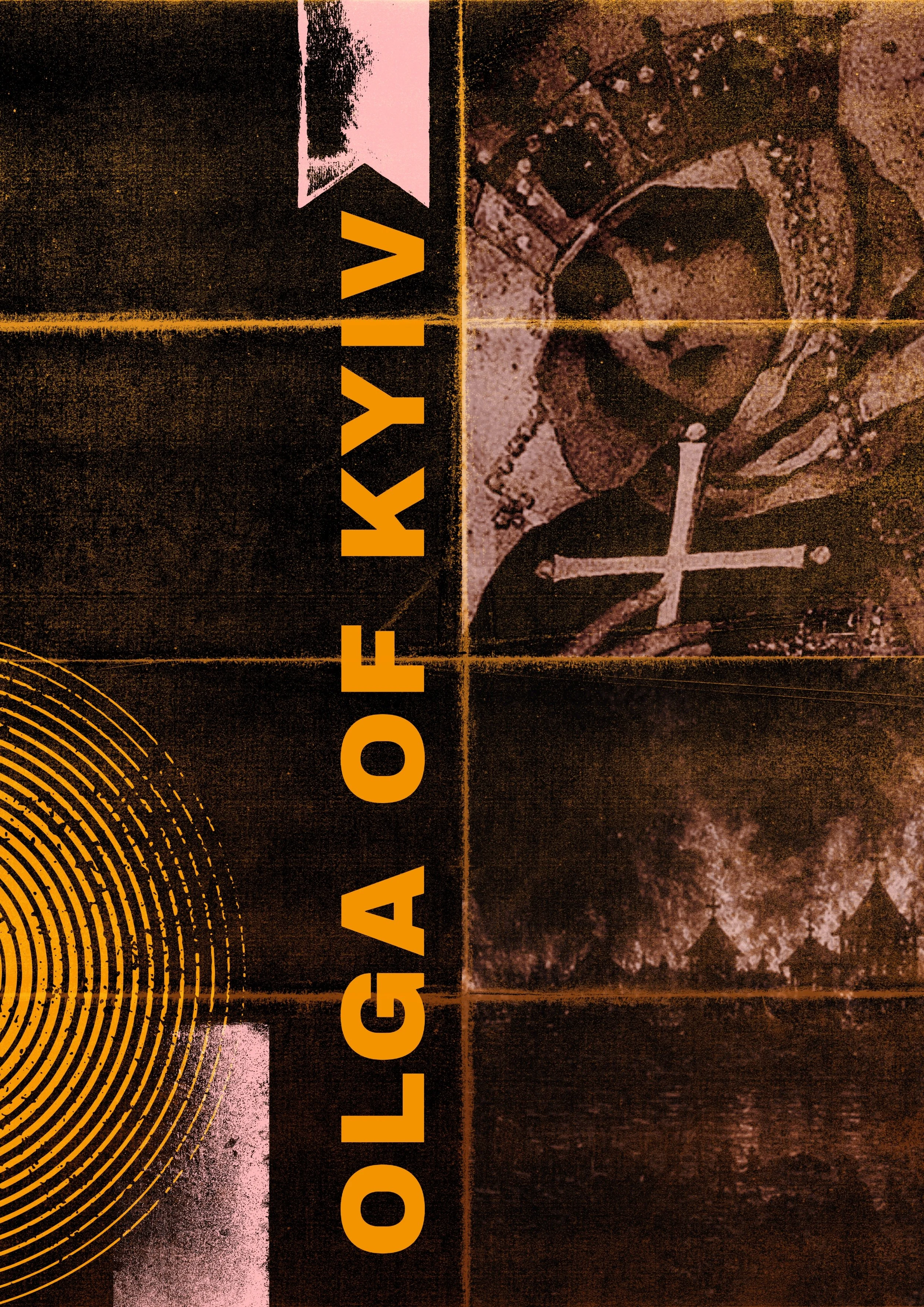
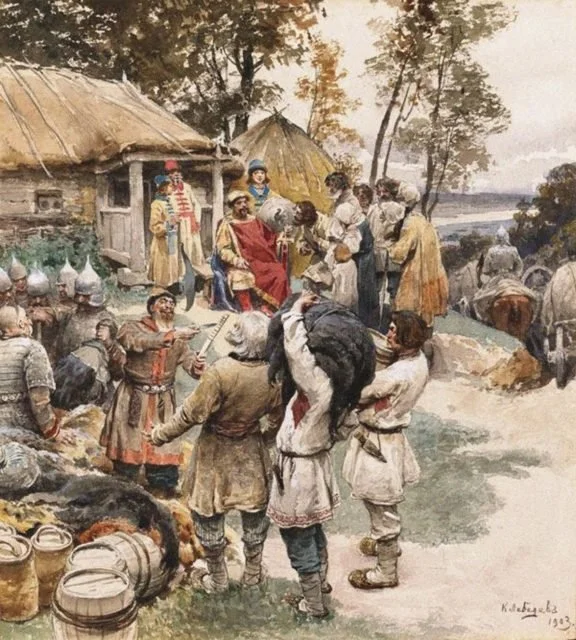
In 945 C.E., Prince Igor of Kyiv rode into Drevlian territory to collect tribute.
He had already received payment once. Then he turned back and demanded more.
The Drevlians had paid tribute to Kyiv before, but this second demand pushed them too far. According to the Primary Chronicle, they compared Igor to a wolf among sheep and decided that if they did not kill him, he would destroy them. They seized him and killed him.
Later Byzantine tradition gives the death a gruesome shape: Igor was tied between bent trees and torn apart when the trunks were released. That detail comes from Leo the Deacon, writing after the fact, so it has to be absorbed carefully. The basic point is pretty firm though; Igor went to collect tribute from the Drevlians, and he did not come home alive.
His widow was Olga of Kyiv.
Their son, Sviatoslav, was still a child.
The Drevlians had killed the prince. Then they made the mistake of thinking his widow would be easier to control.
Who Was Olga of Kyiv?
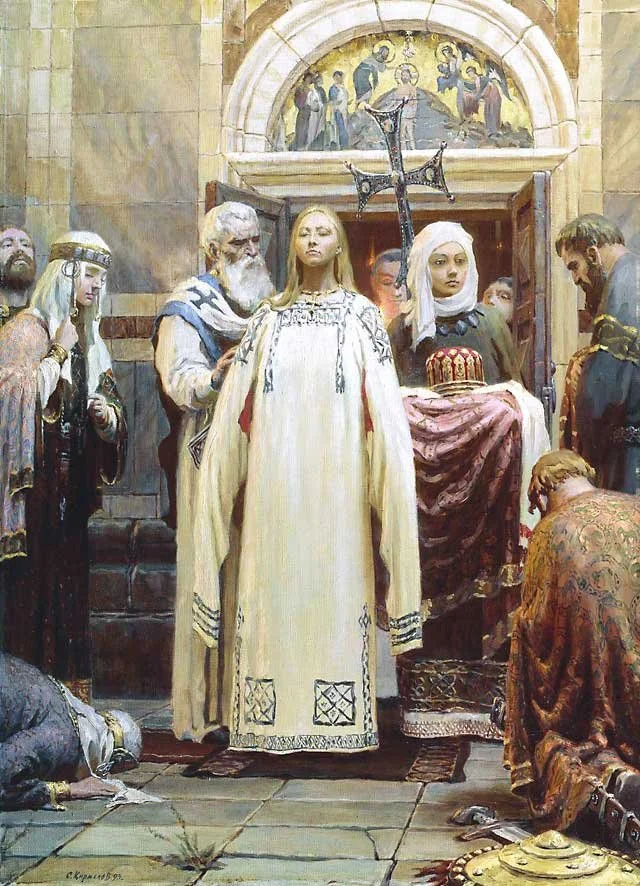
Olga was born sometime in the late ninth or early tenth century. Her exact birth year is uncertain, and the sources disagree. The Primary Chronicle connects her with Pskov, and some traditions describe her as having Varangian, or Norse, origins.
She married Igor of Kyiv, a ruler of the early Rus polity centered on Kyiv.
*Quick note here: Kyiv and Kiev are used interchangeably in most sources. In Ukraine, Kyiv is the proper spelling. In Russia, Kiev. Both are technically correct, but the city which was founded in the 6th–7th century (officially celebrated 482 AD), was known as Kyiv in Old East Slavic.
The Rus were a mix of Slavic, Finnic, and Scandinavian-linked elites and communities tied together by trade, warfare, tribute, rivers, and dynastic rule.
Kyivan Rus was still young in Olga’s lifetime. It was powerful, but it was also held together by personal rule, tribute networks, military force, and agreements with neighboring peoples. A prince who collected tribute had to prove he could protect his authority. A tribe that refused tribute risked military punishment.
Olga entered history as Igor’s wife, but after his death, she ruled as regent for their son. Britannica describes her as the first recorded female ruler of the Rus and the first member of Kyiv’s ruling family to adopt Christianity.
Before her baptism, before sainthood, and before her later religious reputation, Olga became famous for revenge.
Igor’s Death and the Drevlian Proposal
The Drevlians lived west of Kyiv, in a region often associated with the forests and riverlands of what is now northern Ukraine. Their capital was Iskorosten, usually identified with modern Korosten.
After killing Igor, the Drevlians did something bold. They sent envoys to Olga and told her to marry their prince, Mal.
That proposal was political. If Olga married Mal, the Drevlians could claim legitimacy over Kyiv through Igor’s widow and young son. They had killed the prince, and now they wanted the regency.
Olga received the envoys.
According to the Primary Chronicle, she told them their proposal pleased her, but she asked them to return to their boats and wait. The next day, she said, her people would carry them in honor before her court.
The Drevlians accepted.
They did not realize she had already ordered a grave dug.
Olga’s First Revenge
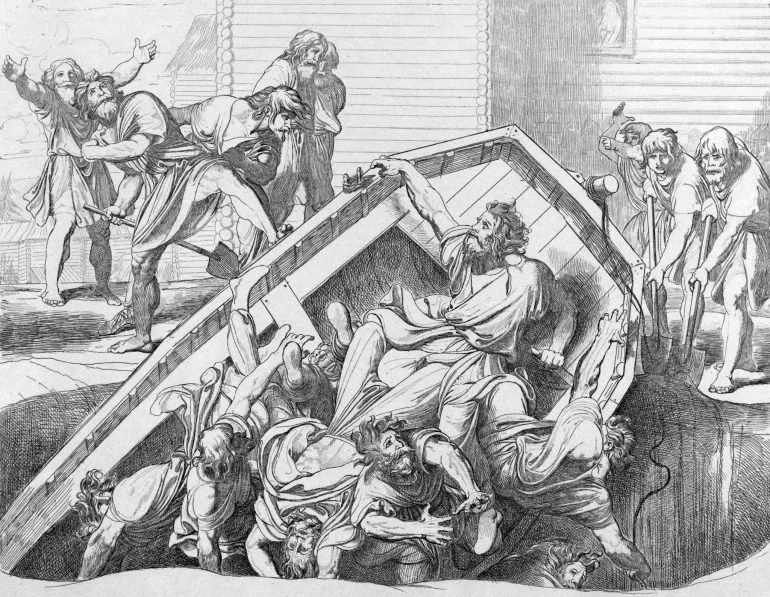
The next morning, the Drevlian envoys sat in their boat, expecting a public display of honor.
Olga’s people carried the boat through Kyiv and brought it to the pit she had prepared. Then they dropped the envoys into the ground, boat and all.
Olga looked down at them and asked whether the honor suited them.
Then she had them buried alive.
The Primary Chronicle preserves the scene as a piece of medieval political theater: the Drevlians came to carry off Kyiv’s widowed princess, and Olga turned their own demand for ceremony into an execution. A University of Texas Old Russian lesson using the chronicle passage identifies this section as the arrival of the Derevlian envoys in Olga’s court and the beginning of her revenge.
The Drevlians at Iskorosten did not yet know what had happened to their first delegation.
Olga sent word back to them.
If they truly wanted her to marry Prince Mal, she said, they should send their most distinguished men to escort her properly.
So they did.
Olga’s Second Revenge
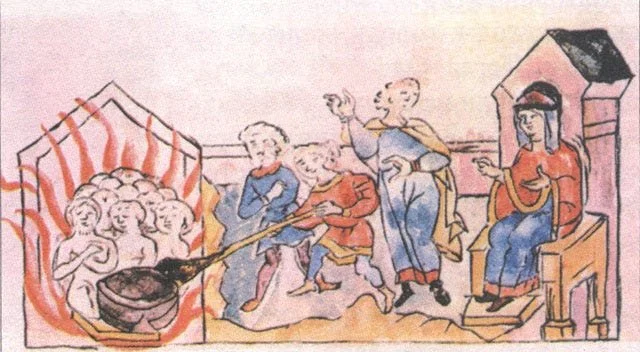
The Drevlians sent another delegation, this time made up of their leading men.
Olga ordered a bathhouse prepared for them. Bathing before an audience with a ruler would have sounded plausible. The envoys entered, expecting hospitality.
Olga had the doors shut.
Then the bathhouse was set on fire.
The second delegation burned alive.
This part of the story is brutal, but it also shows how Olga was working. She did not rush straight to war. She removed Drevlian representatives in stages. She used courtesy, ritual, and expectation against them. She allowed the Drevlians to believe they were negotiating from strength while she cut away their political leadership.
Then she moved to the funeral.
The Funeral Feast
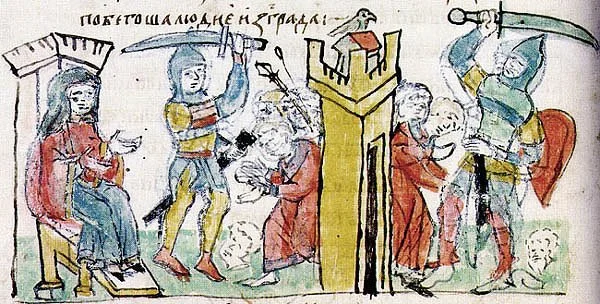
Olga sent another message to the Drevlians.
She said she was coming to them and asked them to prepare a funeral feast for Igor. Funeral rites were serious business, and the request made sense. A widow might mourn her murdered husband before entering a new arrangement with the people who killed him.
The Drevlians prepared the feast.
Olga came to Igor’s burial mound and wept for him. Then her men held a great funeral banquet. The Drevlians drank heavily.
When they were drunk, Olga ordered her men to kill them.
The Primary Chronicle gives the number of dead as five thousand. That number may be exaggerated, but the event belongs to the same revenge cycle: Olga used a public ritual to lure the Drevlians into vulnerability, then destroyed them.
After the envoys, the noble delegation, and the funeral guests were dead, Olga gathered an army.
This time, she went to war.
The Siege of Iskorosten
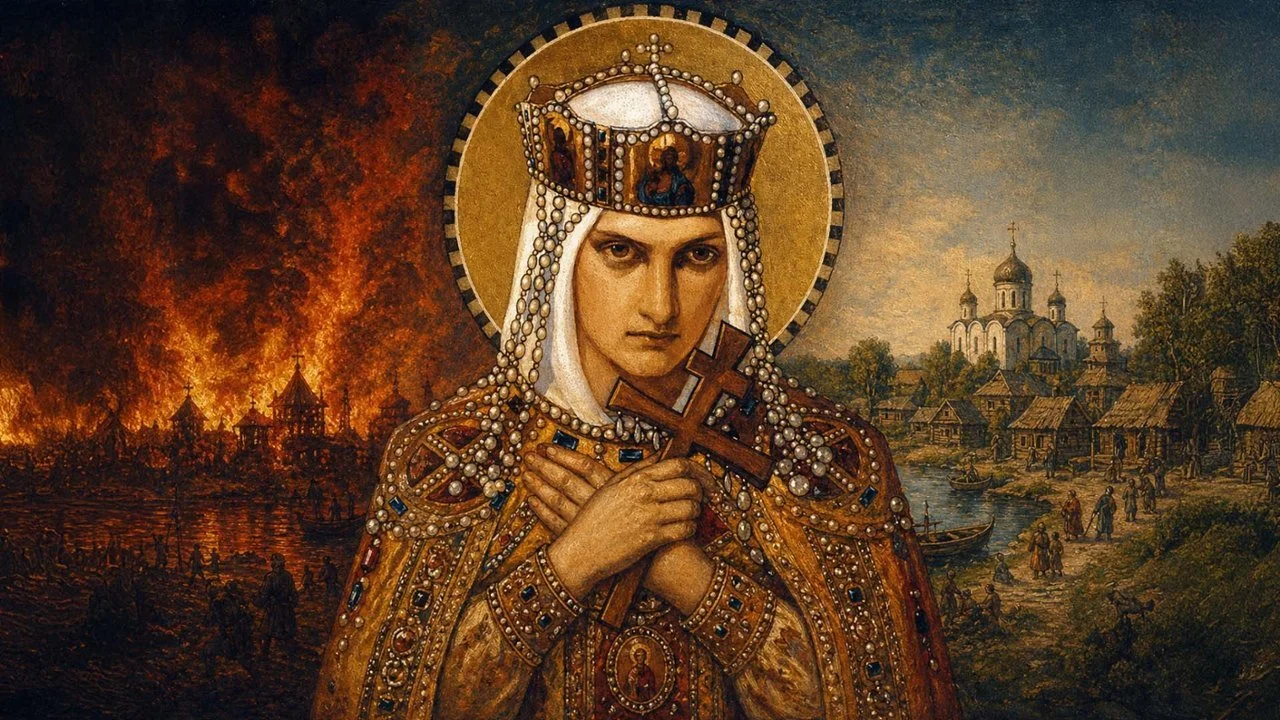
Olga marched against the Drevlians with her young son Sviatoslav.
The campaign centered on Iskorosten, the Drevlian stronghold tied to Igor’s murder. The city resisted. According to the Primary Chronicle, Olga besieged it for a long time and could not take it by force.
Then she offered terms.
She told the people of Iskorosten she had already taken enough revenge. She asked for a small tribute from each household: three pigeons and three sparrows.
The request sounded harmless. After tribute, siege, and fear, birds must have seemed like a small price to pay.
The people gathered the birds and sent them to Olga.
She ordered her soldiers to tie sulfur and burning material to the birds, then release them. The birds flew back to their nests under the eaves, in the barns, and in the houses of Iskorosten.
The city caught fire.
As people fled, Olga’s army captured them. Some were killed. Some were enslaved. Others were left to pay tribute.
The burning of Iskorosten is the most famous part of Olga’s revenge. It is also the part that modern readers often question most. The bird-fire story has the shape of legend, and medieval chronicles often used dramatic patterns to show wisdom, punishment, and divine or political order.
But the story survived because it fit Olga’s image in the chronicle: patient, calculating, and willing to turn ordinary things into weapons.
The Drevlians killed Igor over tribute.
Olga destroyed their power and rebuilt the tribute system herself.
Olga as Ruler
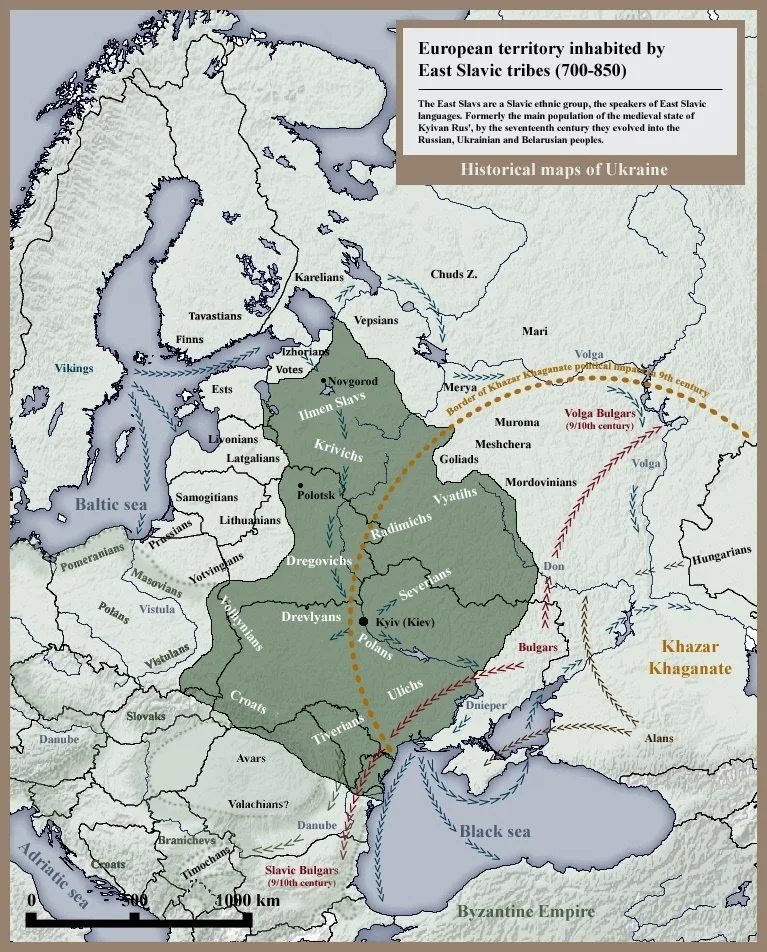
Olga’s revenge gets the attention, but her rule did more than punish the Drevlians.
After Igor’s death, Olga governed as regent for Sviatoslav. She had to secure Kyiv’s authority, control tribute, and prevent other groups from following the Drevlian example.
The Primary Chronicle says Olga traveled through her lands and established fixed tribute points, hunting grounds, and administrative centers. These reforms were practical. Igor’s death had shown the danger of tribute collection based on personal demand and force. Olga moved toward a more organized system.
Instead of a prince riding out and demanding whatever he thought he could take, tribute could be collected through defined places and obligations. That helped strengthen Kyiv’s control and reduced the kind of unstable confrontation that had killed Igor.
Olga ruled in a violent political culture, but she also understood administration. She punished rebellion, then built a system that made another tribute disaster less likely.
That is one reason she remained important after the revenge story.
Olga and Sviatoslav
Olga ruled for her son while he was young, but Sviatoslav grew into a very different kind of ruler.
He became a warrior prince, famous for campaigns against the Khazars, Bulgars, and others. He preferred military life and remained attached to traditional pagan practice. The Primary Chronicle presents him as direct, warlike, and resistant to his mother’s Christianity.
Olga tried to persuade him to accept baptism, but he refused. He told her his warrior companions would mock him.
This had political implications. Olga could convert herself, but she could not force the ruling military elite of Rus to follow her. Christianity was already present in Kyiv before Olga’s baptism. The Rus-Byzantine treaty of 945 mentions Christians among the Rus, and Kyiv had a church of St. Elias. But Olga’s personal conversion did not immediately Christianize the whole polity.
That would come later, under her grandson Vladimir in 988.
Olga’s Baptism
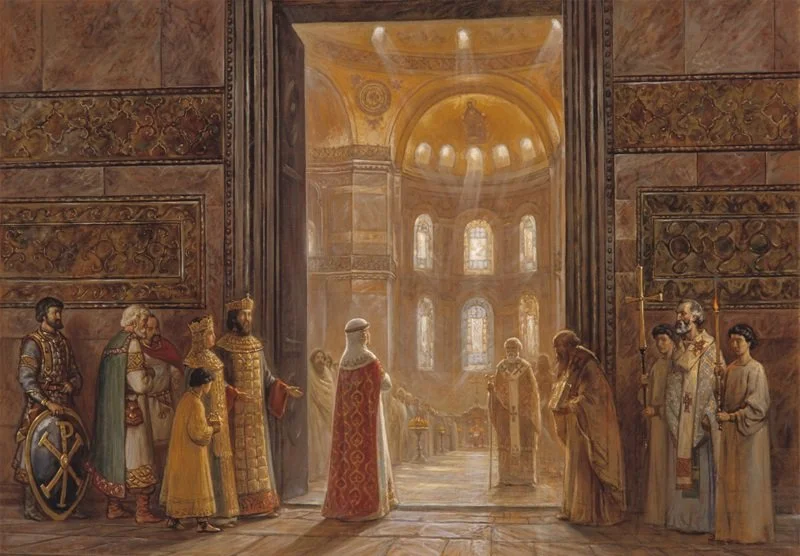
Olga is most famous in Christian tradition as the first ruler of Rus to accept Christianity.
The details of her baptism are complicated. The Primary Chronicle places her baptism in Constantinople and gives the emperor Constantine VII a major role. Byzantine sources confirm that Olga visited Constantinople, though they differ from the chronicle in important ways.
The Byzantine Book of Ceremonies describes Olga’s reception at the imperial court. It lists her entourage, including merchants, attendants, relatives, and a priest named Gregory, but it does not describe her baptism during the visit. Later Byzantine writer John Skylitzes says Olga came to Constantinople after her husband died, was baptized, showed devotion, and returned home.
Modern scholars have debated whether Olga was baptized in Kyiv before the visit, in Constantinople during the visit, or in connection with more than one ceremonial moment. The broad fact remains: Olga accepted Christianity and took the Christian name Helena.
Her conversion linked Kyiv more closely to the Christian diplomacy of Byzantium. It also gave later Christian writers a way to present her as the beginning of Rus Christianity, even though her son refused baptism.
Britannica identifies Olga as the first member of Kyiv’s ruling family to adopt Christianity and the first Kyivan saint of the Orthodox Church.
Olga in Constantinople
Olga’s visit to Constantinople was a major diplomatic event.
Constantinople was the capital of the Byzantine Empire, one of the richest and most ceremonially complex courts in medieval Europe and the eastern Mediterranean. A ruler from Kyiv arriving there was treated through carefully arranged ritual: processions, audiences, gifts, ranks, seating, clothing, and formal language.
The Primary Chronicle turns the visit into another example of Olga’s shrewdness. In that version, the emperor admires her wisdom and beauty and wants to marry her. Olga agrees to baptism first and asks the emperor to serve as her sponsor. Afterward, she refuses marriage because a godfather cannot marry his goddaughter. The emperor then admits she has outwitted him.
That scene was almost certainly more influenced by literary storytelling rather than a literal marriage proposal, as Constantine VII already had an empress. But the story does reveal how later Rus writers wanted Olga remembered: clever enough to outmaneuver an emperor, wise enough to accept baptism, and brave enough to protect her independence.
Olga’s diplomacy with Byzantium continued after her conversion. She sought ties with Christian powers, but Kyiv did not become firmly Christian under her rule.
Olga and the West
Olga also reached beyond Byzantium.
Around 959, she sent envoys to the German king Otto I, later Holy Roman Emperor, asking for a bishop and priests. Otto responded by sending a mission, eventually associated with Bishop Adalbert of Magdeburg.
That mission failed.
By the time Adalbert reached Rus, the political situation had shifted. Sviatoslav’s pagan military circle remained powerful, and the Christian mission did not gain the footing Otto hoped for. Adalbert later returned west.
This episode shows that Olga’s Christianity was not only private devotion. She explored church ties and diplomacy with both Byzantium and the Latin West. But without Sviatoslav’s support, she could not turn Rus into a Christian polity.
Her grandson Vladimir would later do what she could not.
Olga’s Final Years
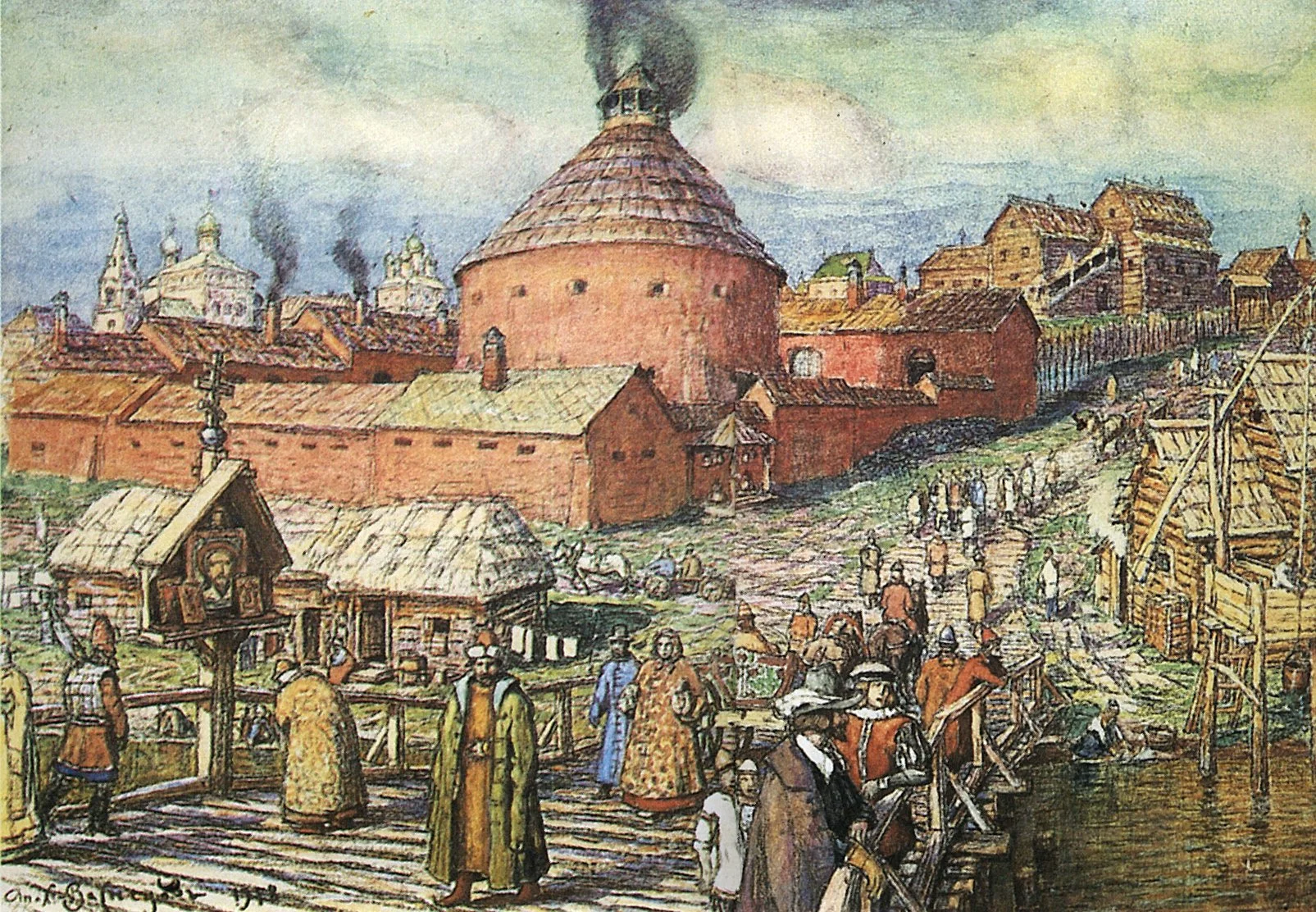
Olga remained in Kyiv while Sviatoslav spent much of his time on campaign.
In 968, the Pechenegs attacked Kyiv while Sviatoslav was away. Olga was in the city with her grandsons. The siege was dangerous enough that Kyiv sent for help, and Sviatoslav eventually returned.
The Primary Chronicle presents Olga as old and ill in her final years, still urging her son to remain in Kyiv rather than leave again for war. Sviatoslav wanted to move his seat to Pereyaslavets on the Danube, where he believed wealth from many lands would flow.
Olga asked him to wait until after her death.
She died in 969.
According to the Primary Chronicle, she asked for a Christian burial and instructed that no pagan funeral feast be held for her. Her priest performed the rites.
That detail fits the larger shape of her later memory: Olga as a ruler who had lived through pagan vengeance, accepted Christianity, and died with Christian burial.
Olga’s Sainthood
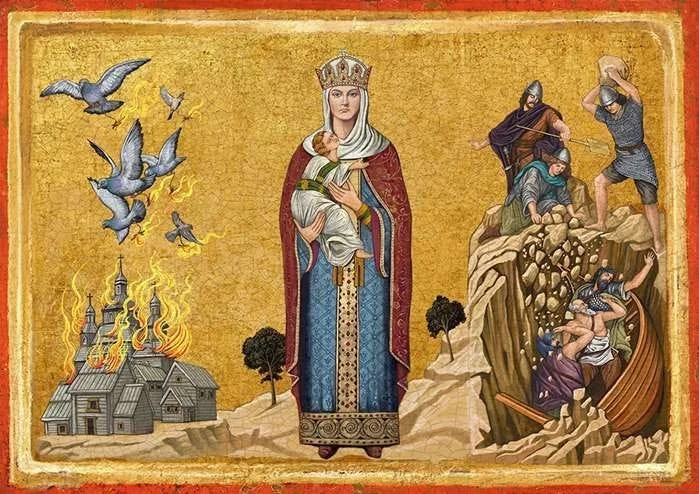
Olga did not Christianize Rus during her lifetime.
Sviatoslav refused baptism. His warriors mocked Christianity. The major conversion came under Vladimir the Great in 988, almost two decades after Olga’s death.
But later Christian tradition treated Olga as the forerunner of that conversion. She had accepted Christianity before the ruling house officially embraced it. She was remembered as “Equal to the Apostles” in Eastern Christian tradition and became a saint.
Her feast day is commonly given as July 11 in Eastern Orthodox tradition, the date associated with her death. She is also venerated as a patron of widows and converts.
The contradiction is obvious to modern readers: the same woman remembered for burying envoys alive, burning men in a bathhouse, slaughtering funeral guests, and destroying Iskorosten is also honored as a saint.
Medieval sainthood did not require a modern idea of gentleness. Olga’s Christian memory emphasized conversion, rulership, wisdom, and her place in the eventual Christianization of Rus. Her revenge remained in the chronicle because it showed power, justice, and dynastic survival in the language of medieval politics.
The Dark History of Olga of Kyiv
Olga of Kyiv ruled in a century when tribute, family loyalty, military force, and religious change shaped every throne.
The Drevlians killed her husband after he demanded tribute twice. Then they tried to marry her into their own ruling line. Olga answered with staged executions, a funeral massacre, a siege, and the destruction of Iskorosten.
Afterward, she strengthened tribute administration, ruled as regent, raised Sviatoslav, entered diplomacy with Constantinople, accepted Christianity, and tried to pull Rus toward the faith her grandson would later adopt for the realm.
Her story survives because it refuses to become simple. Olga was a widow, regent, strategist, convert, saint, and killer. The revenge stories may carry legendary shaping, but they also preserve the political fear she inspired.
In the end, Olga held Kyiv after Igor’s murder, broke the Drevlians, and became the first Christian ruler in the dynasty that later baptized Rus.
Want More?
If you’re drawn to dark history, old folklore, lost places, and unsolved mysteries, my books might be just what you’re looking for.
Start with A Vow for Breaking for Appalachian folk horror, family curses, and a house full of secrets — or A Dark Most Fair for a dark fairy tale about jealousy, longing, and a dangerous bargain with the fey.
Sources
Britannica. “Saint Olga.” Encyclopaedia Britannica.
Cross, Samuel Hazzard, and Olgerd P. Sherbowitz-Wetzor, translators. The Russian Primary Chronicle: Laurentian Text. Medieval Academy of America, 1953.
Dimnik, Martin. The Dynasty of Chernigov, 1054–1146. Pontifical Institute of Mediaeval Studies, 1994.
Franklin, Simon, and Jonathan Shepard. The Emergence of Rus 750–1200. Longman, 1996.
Leo the Deacon. The History of Leo the Deacon: Byzantine Military Expansion in the Tenth Century. Translated by Alice-Mary Talbot and Denis F. Sullivan, Dumbarton Oaks, 2005.
Pritsak, Omeljan. “When and Where Was Ol’ga Baptized?” Harvard Ukrainian Studies, vol. 9, no. 1/2, 1985, pp. 5–24.
Raffensperger, Christian, and Donald Ostrowski. The Ruling Families of Rus: Clan, Family and Kingdom. Reaktion Books, 2023.
Shepard, Jonathan. “The Origins of Rus’ (c. 900–1015).” The Cambridge History of Russia, vol. 1, edited by Maureen Perrie, Cambridge University Press, 2006.