The Donner Tragedy
In the late winter of 1847, rescuers reached a cluster of cabins near Truckee Lake in the Sierra Nevada.
The snow was deep enough to bury walls. Smoke leaked through gaps in rough roofs. Inside, children huddled near low fires that offered more smoke than warmth. They were starving, stunned, and too weak to explain everything that had happened around them.
When rescuers entered the cabins and camps, they found what months of cold and hunger had done.
The Donner Party had left the Midwest for California in 1846 with wagons, livestock, families, and plans for a better life. They expected hardship. Everyone on the overland trail expected hardship. What they did not expect was a chain of bad advice, late departures, brutal terrain, internal violence, lost livestock, early snow, and starvation in the mountains.
By the time the last survivors reached safety in 1847, the Donner Party had become one of the darkest stories in American frontier history.
Who Was the Donner Party?
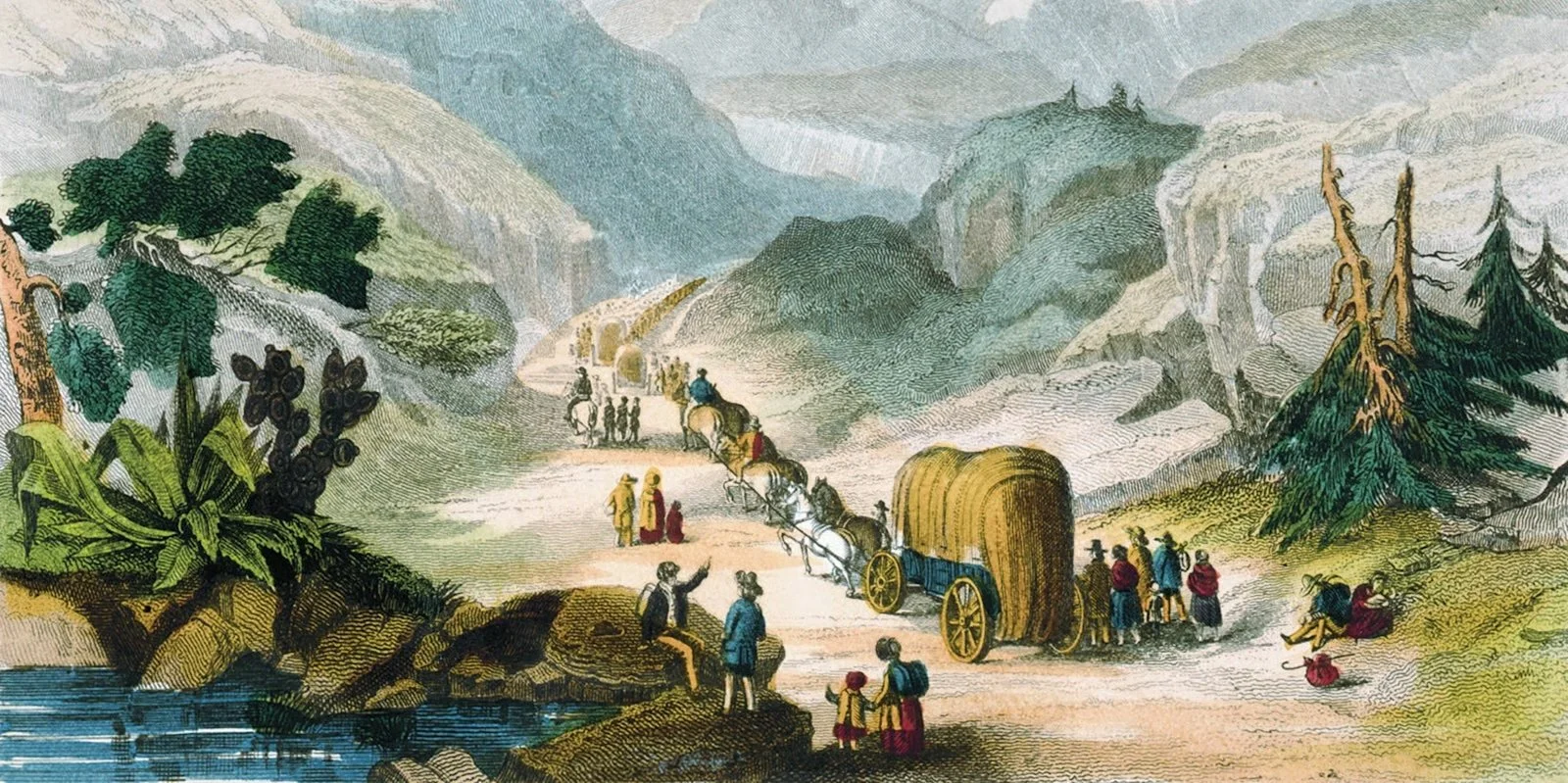
The Donner Party was not one family. It was a group of emigrants traveling west toward California during the great overland migration of the 1840s.
Many came from Illinois. The best-known families included the Donners, the Reeds, the Breens, the Graveses, the Murphys, the Eddys, the Kesebergs, the Fosters, and several hired teamsters and single men traveling with the wagons.
George Donner and Jacob Donner were brothers. James Reed was a wealthy and ambitious businessman traveling with his wife, Margaret, their children, and Margaret’s elderly mother, Sarah Keyes. The group included infants, teenagers, young married couples, working men, servants, and people who had already risked everything on the promise of California.
They were not fools. They were not monsters. They were ordinary people moving through a country that punished delay, pride, exhaustion, and bad information.
That is part of what makes the Donner Party tragedy so hard to shake. The disaster did not begin with one huge mistake. It began with a series of decisions that made the next decision worse.
Leaving for California
In spring 1846, thousands of emigrants were moving west. California promised land, opportunity, trade, and a new start. The route was difficult, but it was known. Wagon trains usually followed established trails through Missouri, Nebraska, Wyoming, Idaho, Nevada, and into California before the Sierra Nevada snow closed the mountain passes.
Timing was everything.
A wagon train needed to leave early enough, move steadily enough, and reach the Sierra Nevada before winter. A few weeks could decide life or death.
The Donner-Reed group left Springfield, Illinois, in April 1846. By May, they had reached Independence, Missouri, the major jumping-off point for the western trail. From there, they joined larger groups of emigrants and followed the California Trail across the plains.
At first, the journey looked manageable. They crossed rivers, passed landmarks, handled livestock, repaired wagons, and moved with the slow rhythm of overland travel. Children walked beside wagons. Families cooked over fires. Adults traded trail gossip and compared advice.
By the time they reached Fort Laramie, the season was already moving. They still had a chance.
Then they heard about a shortcut.
The Hastings Cutoff
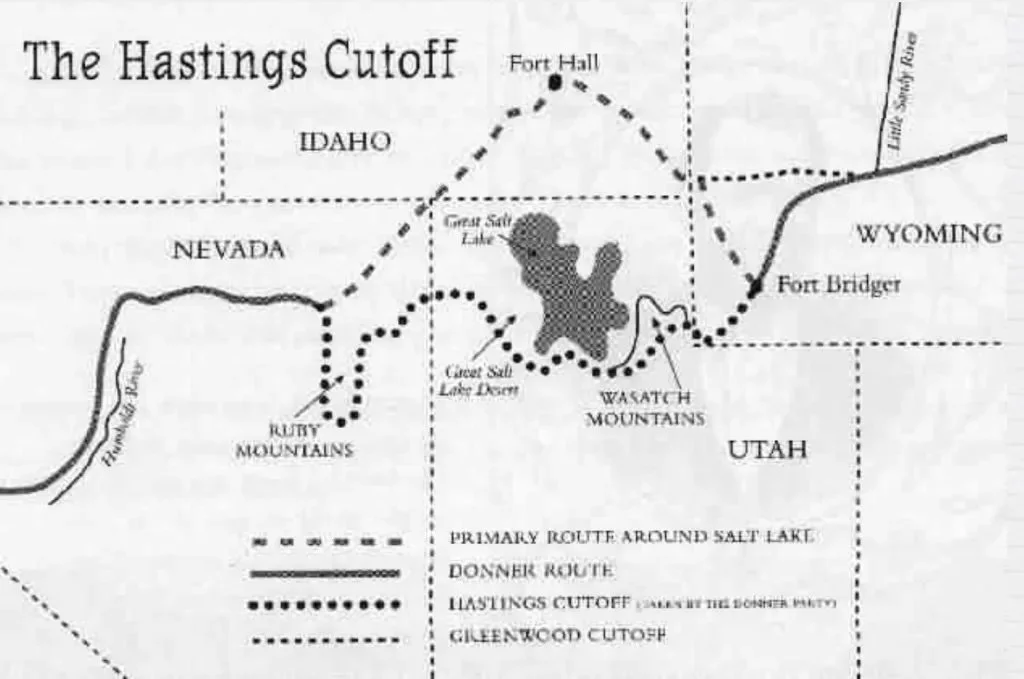
Lansford Hastings had promoted a new route to California called the Hastings Cutoff.
The promise was simple: leave the established trail, pass south of the Great Salt Lake, and save time on the way to California. Hastings had promoted the route in print, but he had not taken wagons over the full path before the Donner Party tried it.
That difference mattered.
At Fort Bridger, the emigrants received encouragement to take the cutoff. The established route was longer on paper, but it had known water, known trail, and known hazards. The Hastings Cutoff offered possibility, but possibility is not the same as a road.
On July 31, 1846, the Donner Party left Fort Bridger and entered the cutoff.
Almost immediately, the route punished them.
The Wasatch Mountains slowed the wagons to a crawl. The group had to cut a road through brush, timber, and canyon country. Progress could drop to a mile or two a day. Wagons broke. Animals weakened. Tempers frayed. Food supplies shrank.
Then came the Great Salt Lake Desert.
Hastings had badly underestimated the crossing. The desert took days longer than expected. The salt flats tore at hooves, wheels, and bodies. Oxen died or ran off. Wagons had to be abandoned. Water ran out. People staggered through heat, dust, and alkaline ground that could swallow wheels up to the axle.
By the time the Donner Party reached the main California Trail again, the shortcut had cost them weeks.
They were late.
Violence on the Trail
The Hastings Cutoff did more than slow the party. It damaged trust inside the group.
By the time the emigrants reached the Humboldt River, exhaustion and resentment had already changed the tone of the journey. Food was lower. animals were weaker. Families argued over lost time, broken wagons, and shared labor.
In October 1846, a fight broke out between James Reed and John Snyder. Snyder beat Reed with a whip handle during an argument over wagons. Reed stabbed him with a knife. Snyder died.
The group held a council and banished Reed rather than execute him. He rode ahead toward California, leaving his wife and children with the wagons.
That decision mattered later. Reed would become one of the people who worked to bring help back to the trapped survivors.
At the time, his banishment left the party more fractured than before.
The Last Push Toward the Sierra Nevada
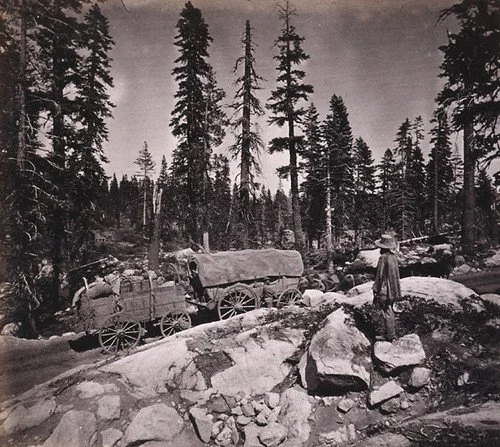
By late October, the Donner Party was trying to cross the Sierra Nevada before winter closed the pass.
They were close to California. Close enough that the disaster feels crueler.
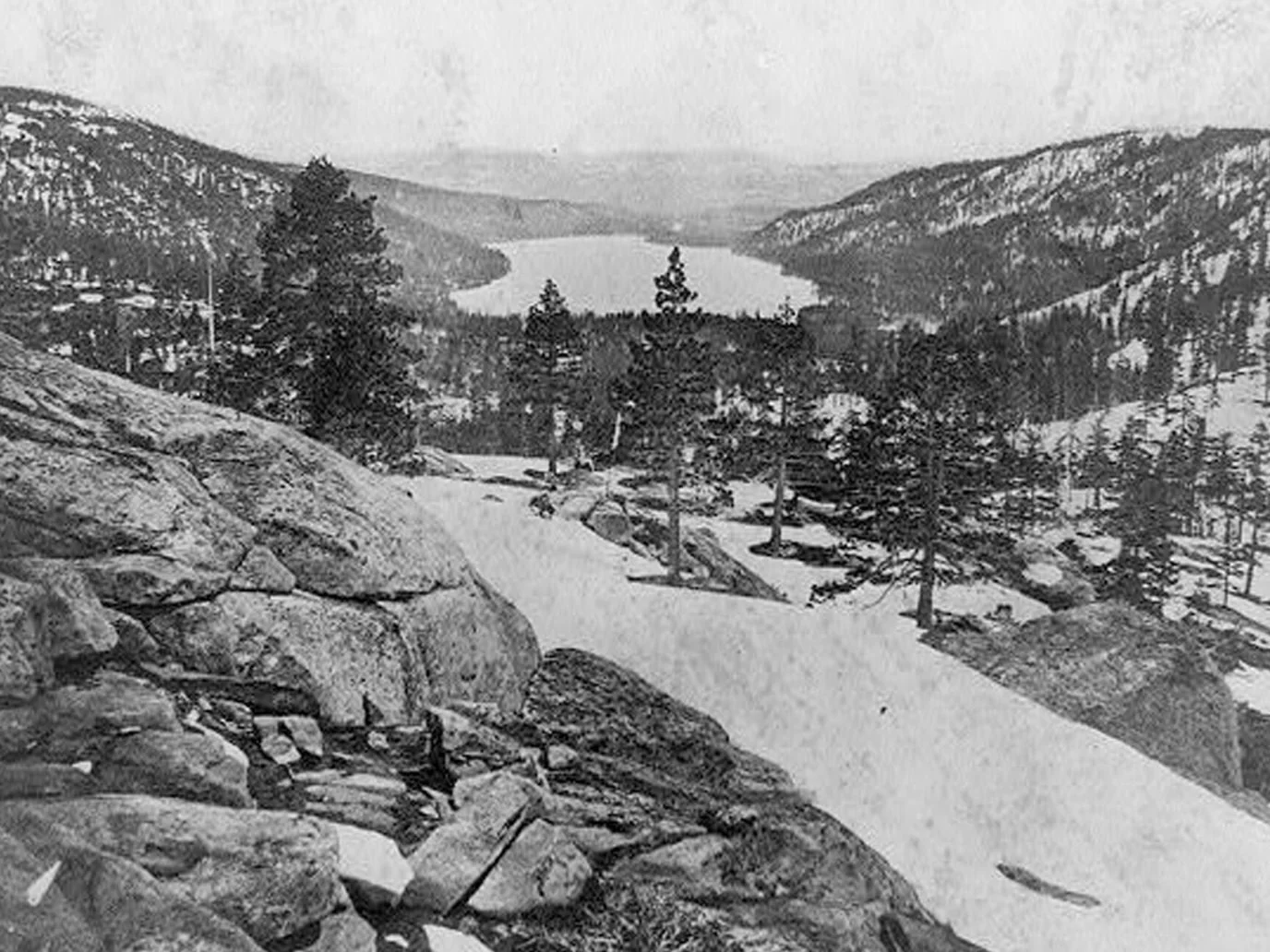
The emigrants reached the Truckee River and moved toward what is now Donner Lake. The pass ahead was already filling with snow. They tried to push through and failed. Snowstorms came hard and fast. Wagons could not move. Oxen were dying. People were too weak to force a passage through the mountains.
The group split into camps.
Some families built crude cabins near Truckee Lake. The Donner families, delayed by a broken wagon axle and injury, camped several miles away at Alder Creek. These camps were not prepared winter settlements. They were desperate shelters built by people who had expected to cross the pass and move on.
The snow did not let them leave.
Trapped at Truckee Lake and Alder Creek
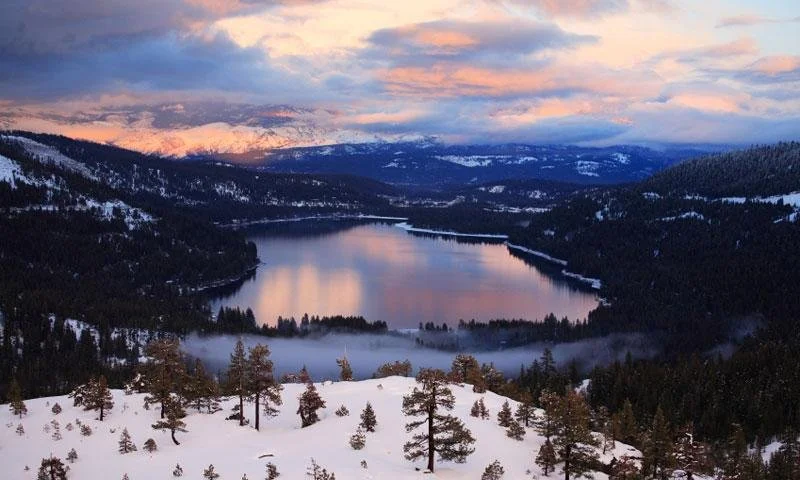
The winter of 1846–1847 buried the camps.
Food ran out. The emigrants slaughtered oxen, then boiled hides, bones, and scraps. Some ate bark, twigs, and leather. People tried to make soup from rawhide. Children weakened. Adults lost strength. Illness and cold moved through the cabins.
The snow trapped them for months.
At Truckee Lake, the Breen, Murphy, Reed, Graves, and Eddy families struggled in cabins near the water. At Alder Creek, the Donner families endured the winter in makeshift tents and shelters.
The two camps were close enough to share the same tragedy and far enough apart to suffer separately.
Outside help had to come from California. But the mountains were dangerous for rescuers, too. Snow, distance, weather, and weak animals delayed every attempt.
By December, some members of the party knew they could not survive by waiting.
They would have to walk out.
The Forlorn Hope
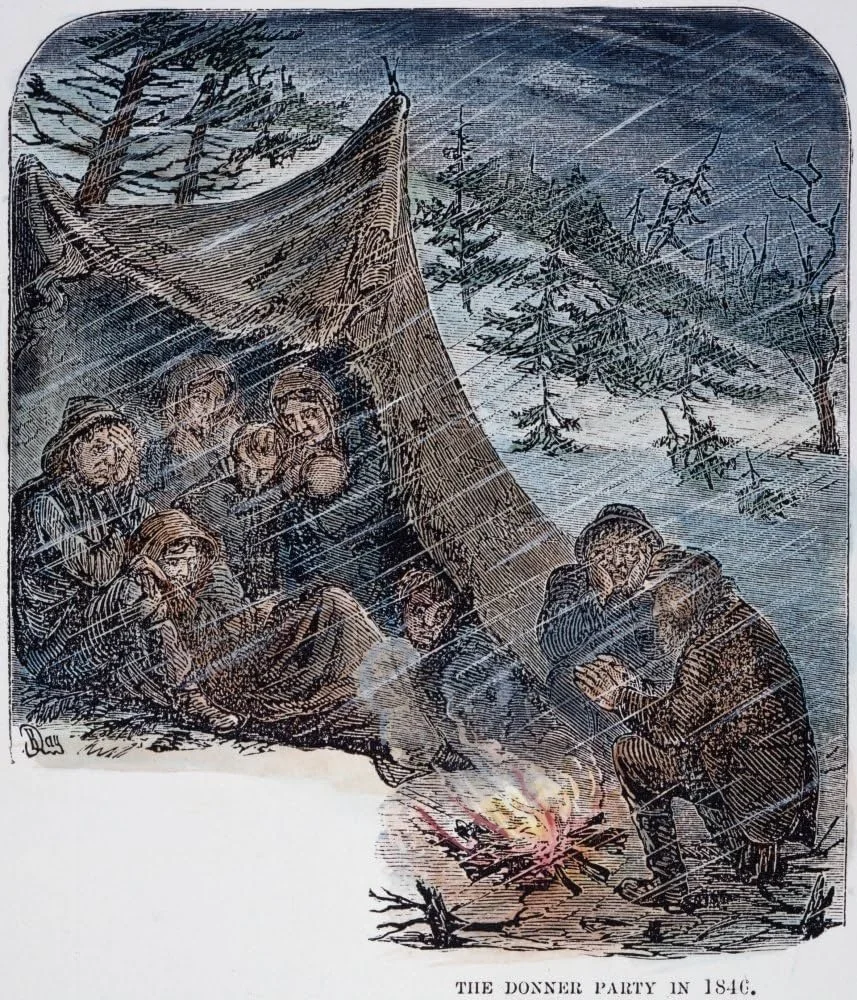
In mid-December 1846, a group of fifteen people left the camps on snowshoes.
Later accounts called them the Forlorn Hope.
They were trying to cross the mountains and reach help in California. They carried little food. They had no reliable trail through deep snow. The group included men, women, and two Miwok guides, Luis and Salvador, who had come east with supplies earlier and were trying to help the emigrants reach safety.
The Forlorn Hope suffered terribly.
Members collapsed from hunger, cold, and exhaustion. Some died on the route. The survivors eventually resorted to cannibalism. Luis and Salvador were later killed by William Foster after they had fled the starving group, one of the ugliest crimes in the whole disaster.
Seven members of the Forlorn Hope finally reached help after more than a month in the mountains.
Their arrival told California that people were still alive at the lake.
Relief parties began moving toward the snowbound camps.
The First Relief
The first relief party reached the camps in February 1847.
What they found was worse than expected. Many people had died. Survivors were starving. Children were too weak to walk. Some adults could barely move.
The rescuers could not take everyone at once.
That fact shaped the rest of the tragedy. Relief parties had to choose who could travel and who had to remain for the next rescue attempt. Children were separated from parents. Some survivors began the journey west and collapsed on the way. Others stayed behind in cabins where food had almost disappeared.
The first relief took a group of survivors out, including many children.
More people remained behind.
The Second and Third Reliefs
The second relief reached the camps in March.
By then, starvation had deepened. Some of the people left at the lake were dead. Others had survived by eating the bodies of those who had died. The rescuers again had to choose who could travel.
During the journey out, another nightmare developed at what became known as Starved Camp.
A group of survivors and rescuers became trapped by weather and exhaustion. Food ran out again. Several people died. Children lay in the snow while adults tried to find enough strength to move them.
One rescuer, John Stark, became one of the few bright names in the disaster. When others wanted to press ahead, Stark helped children one by one through the snow. He carried, guided, and coaxed them forward until they reached safety.
The third relief found more death at the camps and on the route. By that point, the rescue effort had become a grim relay through starvation, snow, and bodies.
The Fourth Relief and Lewis Keseberg
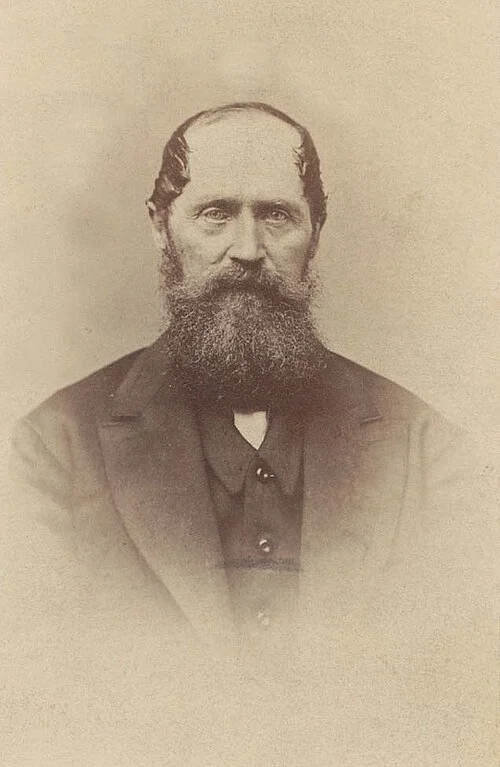
The final relief party reached the camps in April 1847.
By then, the thaw had begun.
Only one person remained alive at the lake: Lewis Keseberg.
Keseberg became one of the most controversial figures in the Donner Party story. Rescuers found human flesh in the camp, along with money and valuables tied to Tamsen Donner. Rumors spread quickly. Some accused Keseberg of murder. He denied killing anyone and later sued for slander.
Keseberg’s reputation never recovered.
Some accusations against him came from people who had every reason to be horrified by what they found. Some came through rumor, anger, and the public appetite for a villain. The available evidence does not prove every claim made against him.
What is clear is that he survived the final stage of the disaster alone, surrounded by death, after months of starvation.
Cannibalism and What We Know
The Donner Party is often reduced to cannibalism, but that version flattens the tragedy into a single gruesome fact.
Cannibalism did happen. Members of the Forlorn Hope ate the dead after starvation had killed people in the group. Survivors and rescuers also described cannibalism at the camps. Some later accounts dispute details, and some survivors denied parts of the story for the rest of their lives.
Archaeology has complicated the picture, especially at the Alder Creek camp. Excavations found thousands of bone fragments from animals, including cattle, deer, horse, and dog, but DNA testing did not identify human bone in the tested samples. That does not prove cannibalism did not occur there. It means the physical evidence from that particular excavation did not confirm it.
The older testimony and the archaeological findings do not fit into a simple headline.
The Donner Party was a starvation disaster first. Cannibalism came after the food was gone, after the animals were gone, after hides and bones had been boiled, after snow blocked the passes, and after rescue failed to arrive in time for many of them.
How Many Survived?
The numbers vary slightly depending on who gets counted, but the National Park Service gives 87 members of the Donner-Reed party and 40 deaths during the winter of 1846–1847.
Most survivors were women and children. Many adult men died from exposure, labor, hunger, injury, or the brutal demands of trying to find help. Entire families were shattered. Some children were orphaned. The Reed and Breen families survived intact, but many others did not.
The last survivors reached safety in spring 1847.
They carried the story into newspapers, books, letters, courtrooms, family histories, and California memory.
The Donner Party and American Dark History
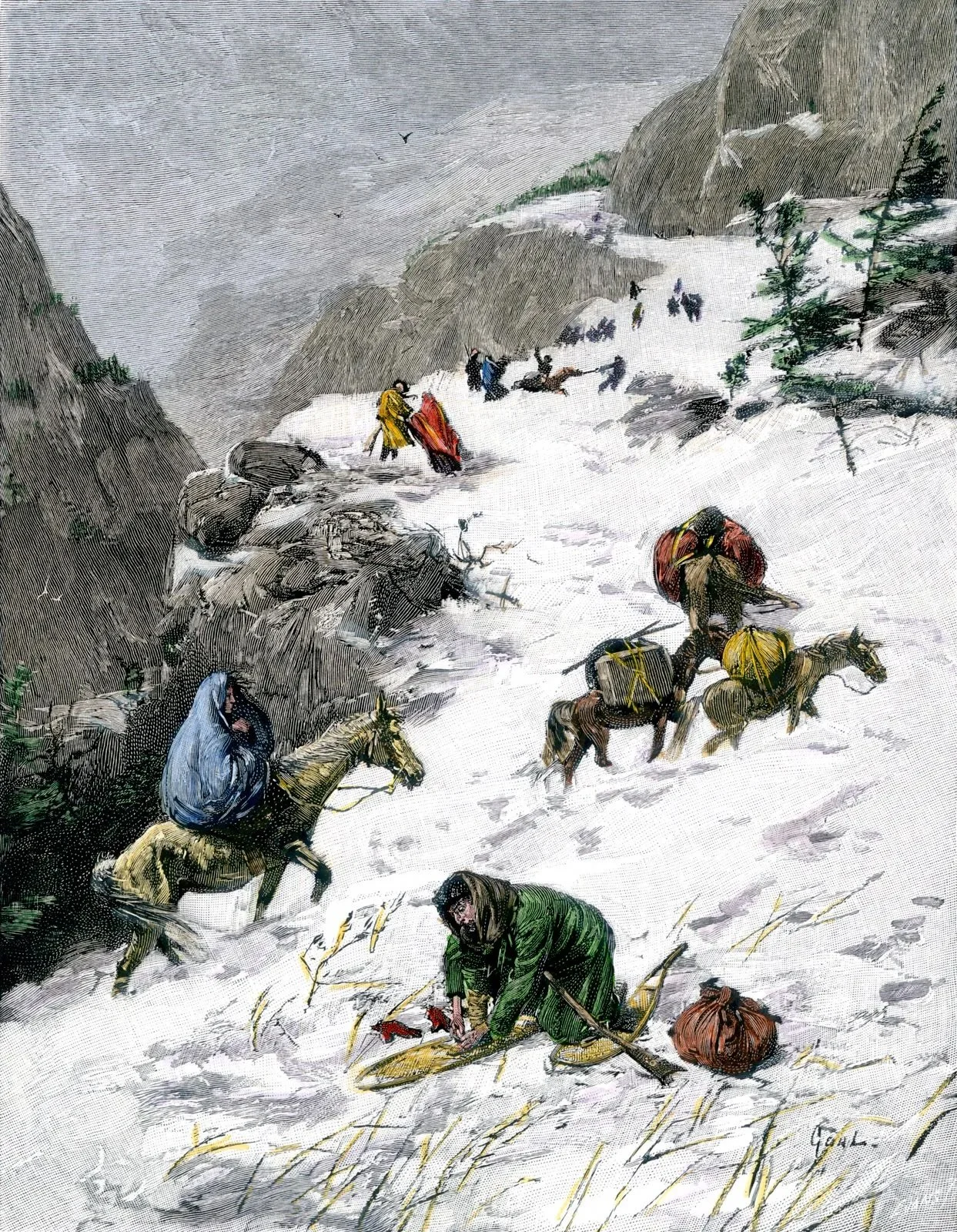
The Donner Party became infamous because the story touched several American fears at once: the danger of migration, the false promise of shortcuts, the violence of hunger, and the terrifying speed with which ordinary people can be pushed beyond every rule they thought governed life.
The disaster also belongs to a larger history that often gets softened in older versions. The overland trail crossed Indigenous homelands. Emigrant movement brought violence, disease, dispossession, and pressure onto Native communities across the West. Miwok men helped the Donner Party, and two of them, Luis and Salvador, were murdered by members of the Forlorn Hope.
That part belongs in the story, too.
The Donner Party was not a ghost tale. It was not a morality play about people who made one bad choice. It was a real migration disaster shaped by ambition, misinformation, weather, violence, hunger, and the brutal geography of the Sierra Nevada.
They were close to California when the snow came.
And that might be the worst part.
Want More?
You can listen to a full deep dive of this topic on the Time and Tales Podcast, now!
Also…
If you’re drawn to dark history, old folklore, lost places, and unsolved mysteries, my books might be just what you’re looking for!
Start with A Vow for Breaking for Appalachian folk horror, family curses, and a house full of secrets — or A Dark Most Fair for a dark fairy tale about jealousy, longing, and a dangerous bargain with the fey.
Sources
Brown, Daniel James. The Indifferent Stars Above: The Harrowing Saga of the Donner Party. William Morrow, 2009.
Britannica. “Donner Party.” Encyclopaedia Britannica, 2026.
Dixon, Kelly J., Julie M. Schablitsky, Shannon A. Novak, Gwen Robbins Schug, and Harold D. Green. “Men, Women, and Children Starving: Archaeology of the Donner Family Camp.” American Antiquity, vol. 75, no. 3, 2010, pp. 627–656.
McGlashan, C. F. History of the Donner Party: A Tragedy of the Sierra. A. L. Bancroft & Company, 1880.
National Park Service. “Donner and Reed Wagon Train Incident.” California National Historic Trail, 2025.
PBS American Experience. The Donner Party. WGBH Educational Foundation.
Rarick, Ethan. Desperate Passage: The Donner Party’s Perilous Journey West. Oxford University Press, 2008.
Syracuse University Maxwell School. “An Archaeology of Desperation: Exploring the Donner Party’s Alder Creek Camp.”
Truckee-Donner Historical Society. “Donner Party: Cannibalism Controversy Still Being Investigated over 160 Years Later.”
Unruh, John D., Jr. The Plains Across: The Overland Emigrants and the Trans-Mississippi West, 1840–60. University of Illinois Press, 1979.