The Terror: The Franklin Expedition
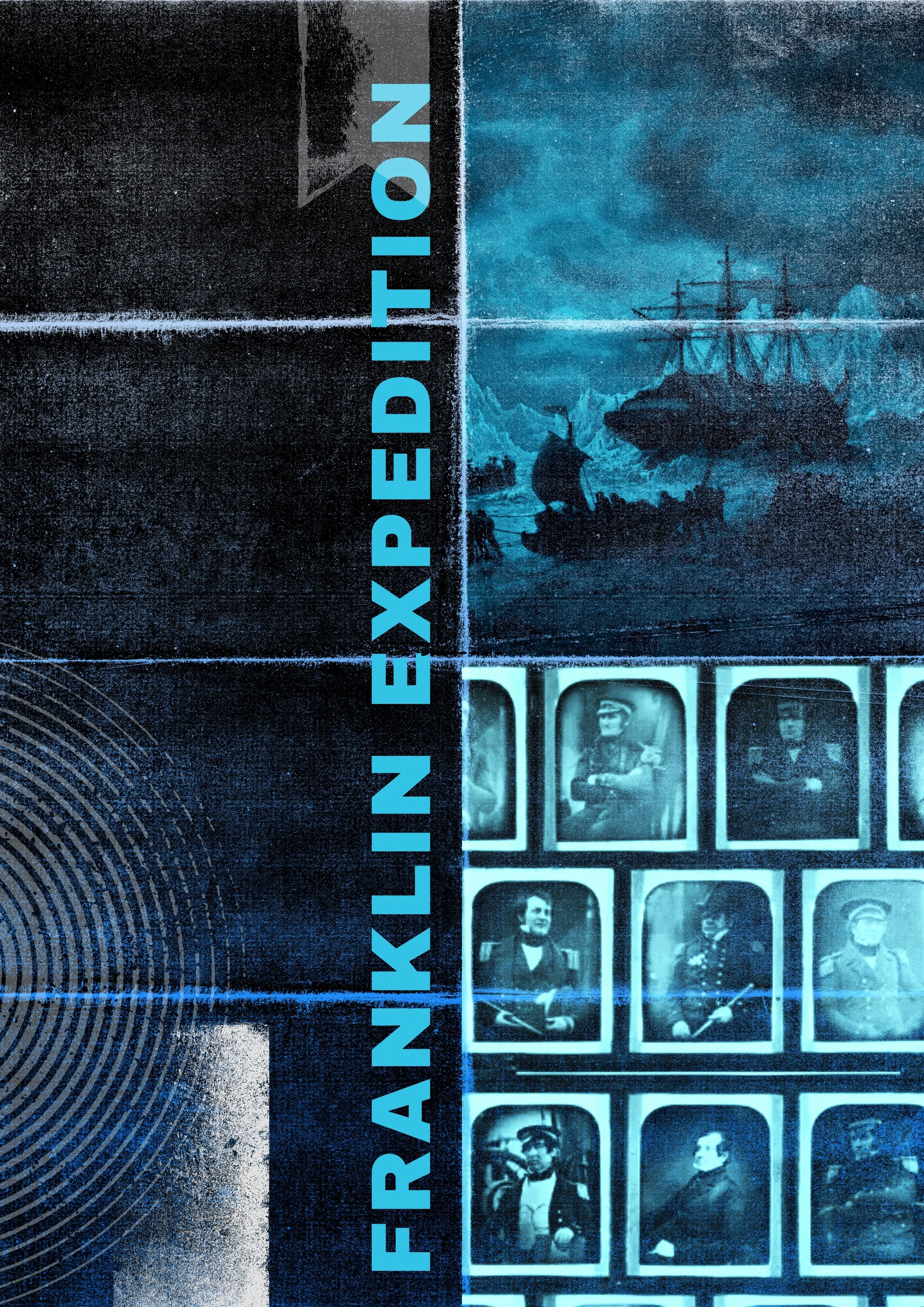
In 1859, a search party on King William Island found a note tucked inside a cairn.
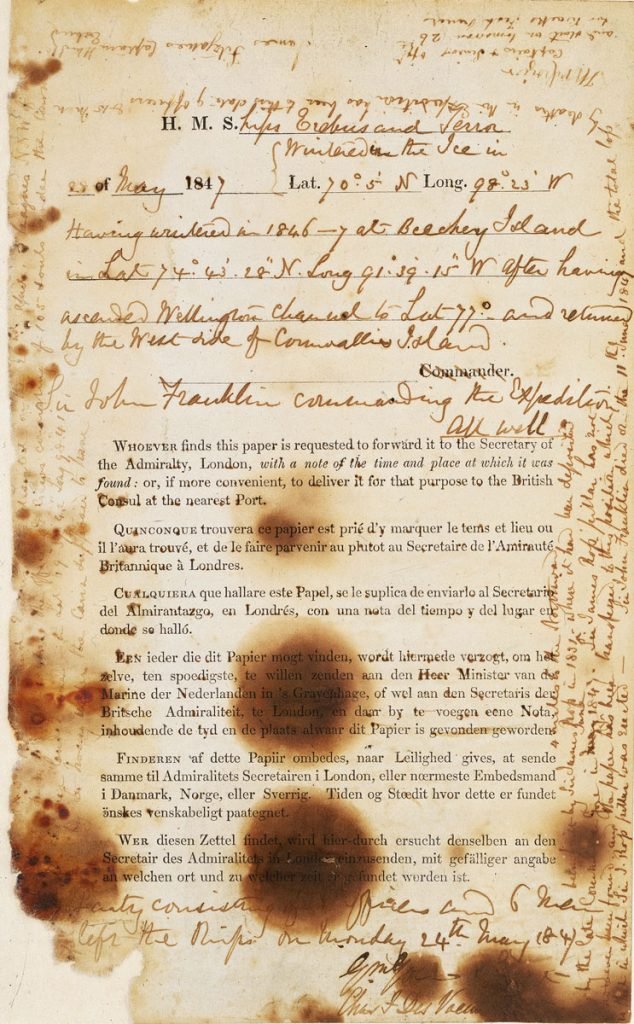
The paper had been left by men from HMS Erebus and HMS Terror, two Royal Navy ships that had vanished in the Arctic fourteen years earlier. The first message on the page sounded controlled and official. It said the ships had wintered safely at Beechey Island in 1845–1846, then sailed south through Peel Sound. It gave dates, names, and positions, the kind of information the Admiralty expected from an expedition still working.
Then someone had come back to the same page almost a year later and written around the margins.
That second message changed everything.
The Franklin Expedition had gone north to finish the Northwest Passage.
It became one of the most famous disasters in polar history.
The Plan Before the Ice
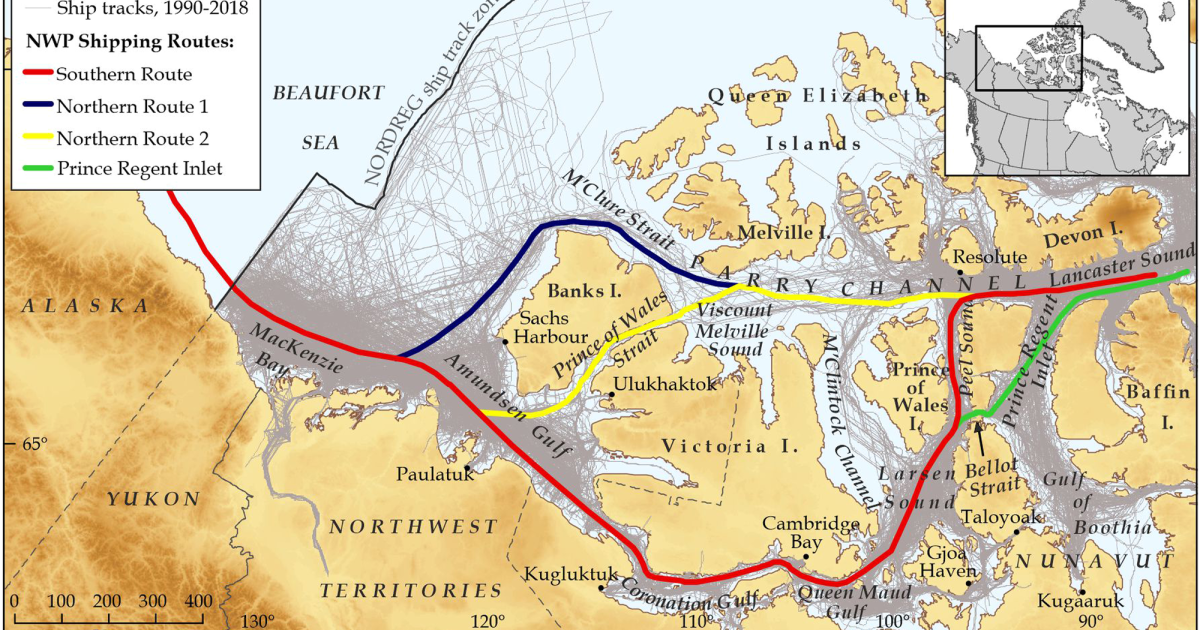
By the 1840s, Britain had spent decades trying to force a navigable route through the Arctic. The Northwest Passage promised a sea route between the Atlantic and Pacific through the islands and channels north of mainland Canada. It carried economic promise, imperial prestige, and scientific ambition. The Royal Navy had emerged from the Napoleonic Wars with ships, officers, and a need for purpose. Polar exploration gave the Admiralty a way to turn wartime skill into peacetime glory.
Many parts of the Arctic coastline had already been mapped by earlier expeditions. The unknown space had narrowed on British charts, and officials believed one final push could connect the pieces. Sir John Barrow, Second Secretary of the Admiralty, had spent much of his career driving British polar exploration. He wanted Britain to complete the route and claim the achievement before another nation did.
The choice of commander carried its own complications. Sir John Franklin was famous, experienced, and respected, but he was also 59 years old. He had already led 2 overland Arctic expeditions, including the disastrous Coppermine expedition of 1819–1822, when men under his command endured starvation and death. That disaster earned him the nickname “the man who ate his boots,” because survivors boiled and ate leather to stay alive. He later served as Lieutenant-Governor of Van Diemen’s Land, now Tasmania, before returning to Britain.
Other men had been considered. James Clark Ross had deep polar experience, but he declined command. Francis Crozier had Arctic and Antarctic experience, but his Irish birth and lower social position worked against him in a class-bound navy. James Fitzjames was charismatic, ambitious, and well connected, but he lacked the same depth of polar command experience.
Franklin got the command. Crozier became captain of HMS Terror and second-in-command of the expedition. Fitzjames commanded HMS Erebus. Crozier brought hard polar experience from earlier Arctic work and from the Antarctic voyage under James Clark Ross. Fitzjames brought naval action, charm, recruiting ability, scientific responsibility, and ambition. Together, Crozier and Fitzjames would become the men named on the final message after Franklin’s death.
The ships assigned to the expedition already had polar histories. HMS Erebus and HMS Terror had served in Antarctic exploration under James Clark Ross, and both were heavily modified for Arctic service. Their hulls had been reinforced. Their bows were strengthened. They carried steam engines adapted from railway locomotives, although those engines offered limited power. They had heating systems, scientific instruments, libraries, preserved food, and supplies meant to last years.
The expedition also carried a scientific mission. Magnetism, geography, weather, natural history, surveying, and navigation all belonged to the work. Assistant surgeon Harry Goodsir represented the expedition’s scientific side. Officers such as Graham Gore and Charles Frederick Des Voeux belonged to the working leadership. Ice masters and sailors with whaling or Arctic experience carried practical knowledge that could decide survival.
On paper, the expedition looked strong. The ships were reinforced. The officers had experience. The stores were extensive. The Admiralty expected danger, delay, and ice, but it also expected Franklin to return with the passage completed or with enough information to finish the work.
The Arctic would test every assumption behind that confidence.
The Last Letters from Greenland
HMS Erebus and HMS Terror left England in May 1845 with 129 men. They sailed north through the Atlantic toward Greenland, where the expedition took on fresh meat, transferred supplies, and sent final letters home before entering the Arctic.
At Whalefish Islands in Disko Bay, the men wrote to parents, wives, siblings, and friends. Those letters still carry the ordinary life of the expedition before it became legend. Men wrote about food, weather, officers, health, shipboard routine, homesickness, discipline, and expectation. Some complained. Some sounded excited. Some described the ships and their equipment. Many assumed more letters would follow after the ships came through the other side of the continent.
Franklin wrote in confident terms. The ships were well supplied. The crews had fresh provisions. The men were preparing to push into Lancaster Sound. The mission ahead looked difficult, but manageable, and the Admiralty had equipped the expedition for years away from home.
A few men were sent back before the ships entered the Arctic proper. The remaining 129 continued west. In late July 1845, whalers saw Erebus and Terror in Baffin Bay. The crews were waiting for ice conditions to allow them forward into Lancaster Sound.
Those whalers became the last Europeans confirmed to have seen Franklin’s expedition alive.
After that, the ships entered the ice. For a while, nobody in Britain panicked. Arctic expeditions often disappeared from communication for long stretches. Franklin had supplies for several years, experienced officers, reinforced vessels, and a public reputation built on Arctic hardship. Families waited. The Admiralty waited. Lady Jane Franklin waited longer than anyone.
The ships had already passed beyond the ordinary reach of help.
Beechey Island
The first winter was spent at Beechey Island, off Devon Island in what is now Nunavut. Searchers found the place years later: the remains of a winter camp, a storehouse, discarded tins, and three graves.
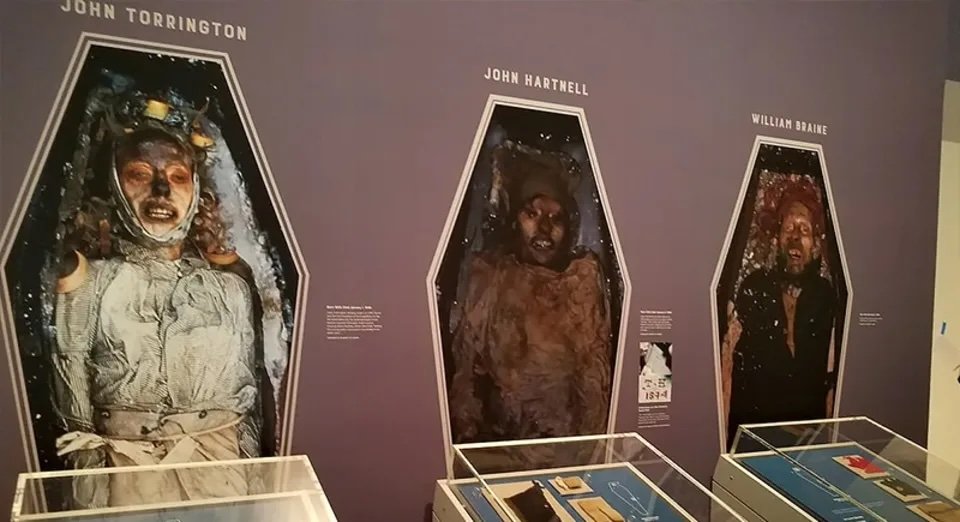
The graves belonged to John Torrington, William Braine, and John Hartnell. Torrington died on January 1, 1846. Hartnell died on January 4. Braine died on April 3. Three deaths during a first Arctic winter did not doom a 129-man expedition by itself, but the timing showed that illness had already reached the crews early in the voyage.
The graves had been made with care. The men were buried in frozen ground with formal attention, boards, and inscriptions. The expedition still had order, tools, labor, command structure, and enough strength to bury its dead properly. Beechey Island held signs of winter hardship, but also signs that Franklin’s men remained organized and disciplined.
More than a century later, researchers exhumed the Beechey Island bodies. The cold had preserved them to an unnerving degree, and their faces became some of the most haunting images tied to the Franklin disaster. Analysis found evidence of pneumonia, tuberculosis in William Braine, poor health, and elevated lead levels. For a time, lead poisoning became one of the most popular explanations for the expedition’s collapse, but later research has made the picture more complicated. Lead may have contributed to illness in some men, but cold, infection, malnutrition, scurvy, starvation, zinc deficiency, exposure, and time trapped in ice all belong to the disaster.
After the winter at Beechey Island, the ships moved on. They sailed south through Peel Sound during a season when that route was open. For a moment, Franklin may have been close to the achievement that had brought him north.
Then the ice closed around the ships.
Trapped Near King William Island
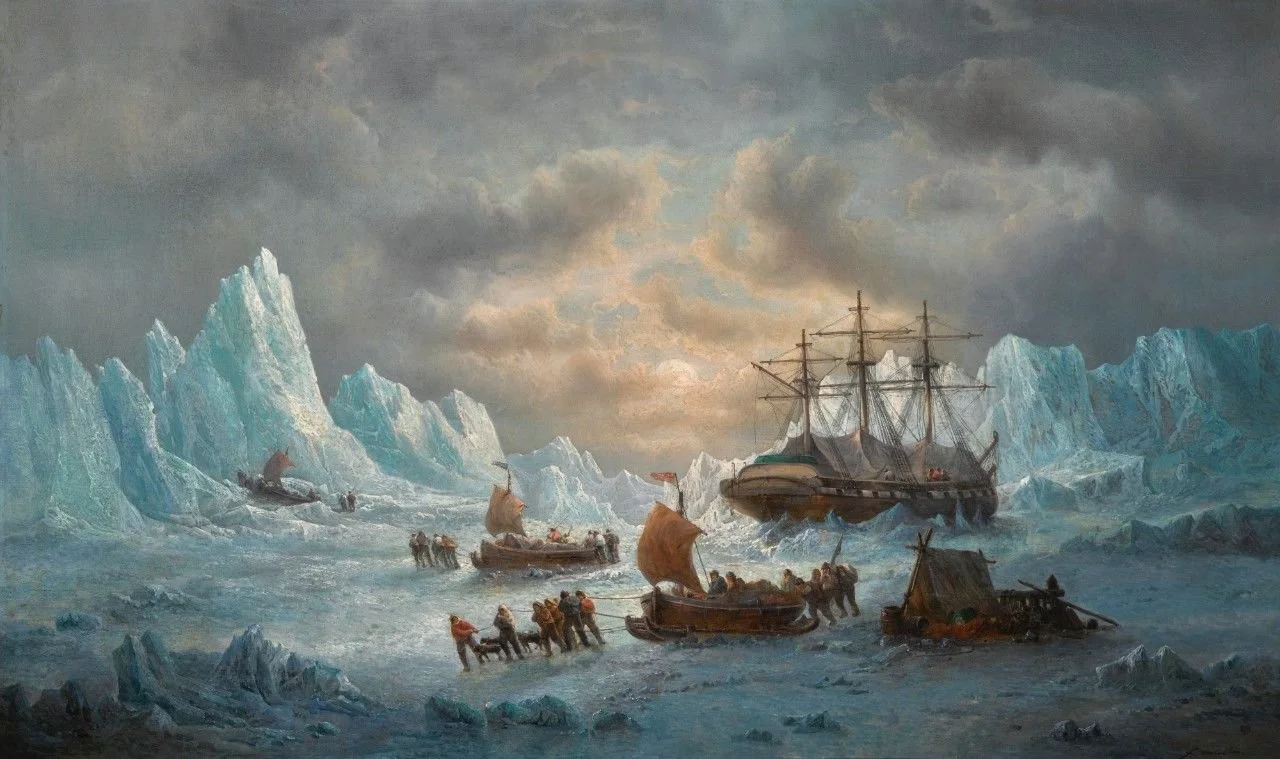
In September 1846, Erebus and Terror became trapped in ice northwest of King William Island. That position was deadly. The ships were no longer simply wintering in a chosen harbor. They were held in a moving, crushing, drifting environment that could keep them far from open water season after season.
The men remained with the ships through the winter of 1846–1847. Franklin died on June 11, 1847. The Victory Point note later gave that date. By then, the expedition had lost its commander, along with other officers and men, but the surviving crews stayed aboard for many months afterward.
Crozier took command. Fitzjames remained a senior leader. Together, they tried to hold the expedition through another winter locked in ice.
Every month would have made survival harder. Food stores declined. Fuel became more precious. Scurvy could weaken gums, joints, wounds, and muscles. Canned provisions may have been compromised in some cases by rushed manufacture or poor sealing, though spoiled tins alone cannot explain everything. Hunting may have helped in limited ways, but the region could not feed more than a hundred weakened men through years of entrapment. The ships offered shelter, discipline, and structure, but a ship held in ice becomes a prison when supplies shrink and sickness spreads.
By April 1848, Erebus and Terror had been trapped for about a year and a half. The death toll had reached 24 officers and men, including Franklin. 105 men were still alive when Crozier and Fitzjames made the decision to abandon the ships.
On April 22, 1848, the survivors left Erebus and Terror. Their plan was to travel south toward the Back River, dragging boats and supplies across King William Island and toward the mainland.
That decision has haunted the Franklin story ever since.
The Long Walk South
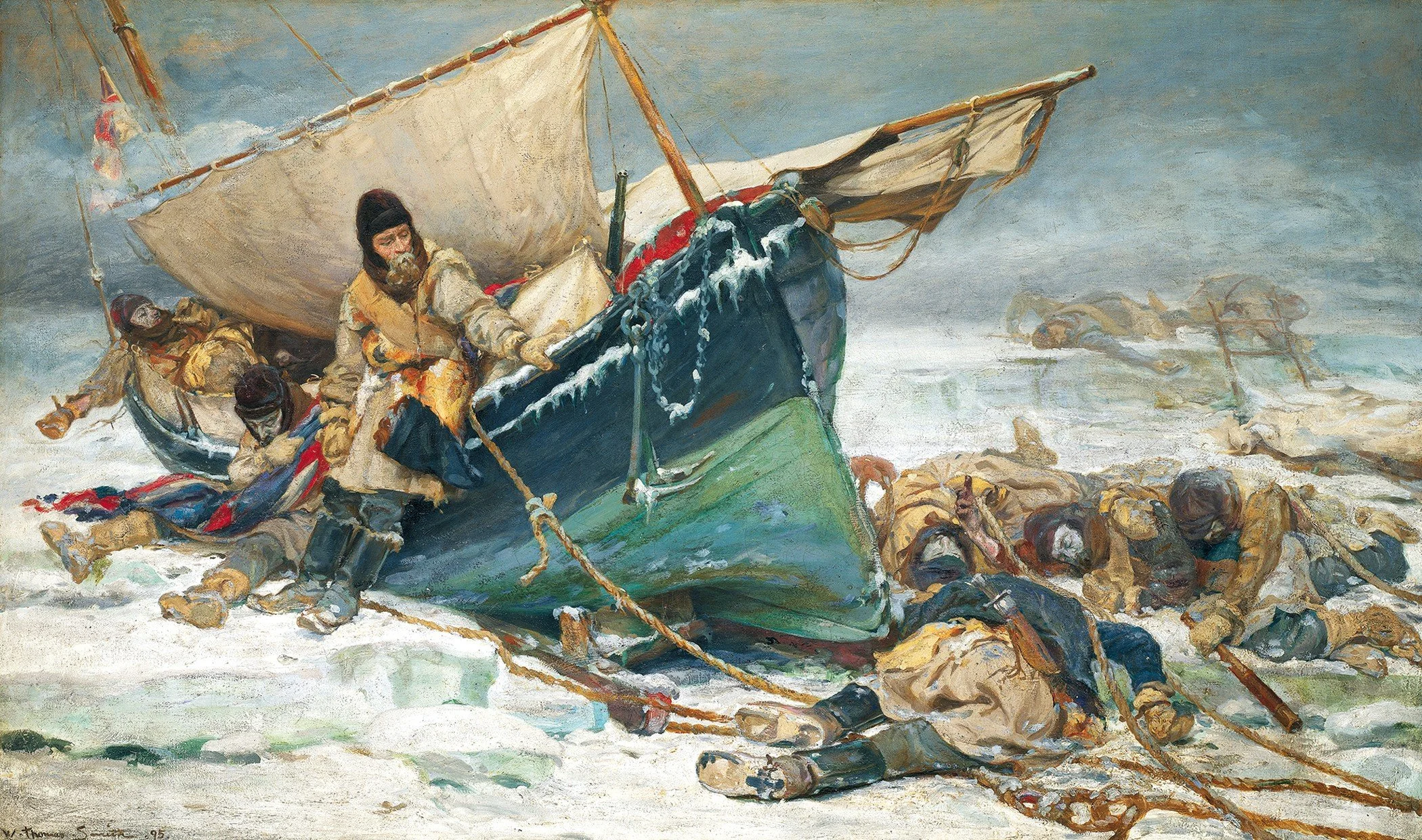
The men left the ships with boats mounted on sledges and loaded with supplies, gear, and personal items. Dragging boats across Arctic terrain is brutal even for healthy men. Franklin’s survivors were already weakened by 2 winters in the ice, disease, dwindling food, and the loss of their commander.
The Back River lay hundreds of kilometers away. Reaching it required crossing King William Island, moving over ice, stone, snow, thawing ground, and coastal terrain, then reaching the mainland. From there, the survivors hoped to follow the river system toward places where rescue, game, or Indigenous contact might give them a chance. The plan required strength they likely no longer had.
The items later found along the route show the strange mixture of naval order, practical need, and desperation that followed them south. Searchers found boats with skeletons inside or nearby. They found silverware, books, clothing, watches, guns, boots, medicine, chocolate, tea, and other objects that seemed both useful and heartbreaking. Some items may have been packed before the men understood how much every pound would cost. Some may have carried practical value. Some may have been personal things men could not bear to abandon. Some may have survived because naval discipline and identity endured longer than the bodies pulling the sledges.
Inuit witnesses later described seeing groups of starving white men moving south. Some were dragging a boat. Some looked thin and weak. Some were already close to death. Others had died in camps along the coast. The expedition did not collapse in one scene. It broke apart across the land, leaving bodies, tents, boats, relics, and memories in the places where men could go no farther.
Back in Britain, the absence of news slowly became alarm.
The First Searches
Concern had grown by 1847 and 1848. Lady Jane Franklin pushed relentlessly for action. She wrote letters, lobbied officials, funded efforts, pressured the Admiralty, and refused to let her husband’s expedition fade into bureaucratic embarrassment. The Admiralty launched search efforts, and private expeditions followed. Ships went north through different approaches. Overland parties searched from the mainland. Searchers looked for camps, cairns, ships, graves, or any trace of the missing men.
The first searchers found Beechey Island and the winter camp. That discovery proved Franklin’s route through the first winter but did not reveal what happened afterward. The search area remained enormous. Ice changed from year to year. Franklin could have taken several possible routes. Searchers often looked in places that made sense on Admiralty charts but missed the direction the ships had actually gone.
The searches carried their own danger. Ships could become trapped. Men could die searching for those who were already dead. Supplies had to be hauled into the same environment that had destroyed Franklin’s expedition. The Arctic turned rescue into another test of endurance.
The British public became consumed by the mystery. Franklin was presented as a hero. His men became symbols of naval courage. Lady Franklin became the widow who would not stop fighting for answers.
Then John Rae brought back the story Britain least wanted.
John Rae and the Inuit Testimony
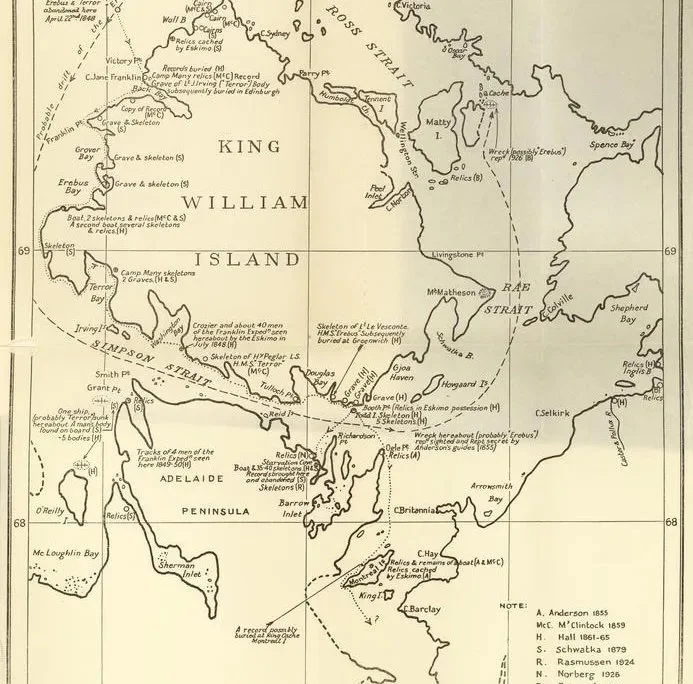
In 1854, Dr. John Rae of the Hudson’s Bay Company traveled through the region near what is now Kugaaruk, Nunavut. Rae was an experienced Arctic traveler who had learned to survive in northern conditions in ways many naval officers resisted. He traveled light, used snowhouses, listened to Inuit knowledge, and understood that survival in the Arctic required adaptation rather than pride.
During his journey, Rae met Inuit who had encountered evidence of Franklin’s men. They described white men starving near the mouth of a river. They had seen bodies. They had found objects from the expedition. Some of those objects were later identified as belonging to Franklin’s officers and crew.
They also reported signs of cannibalism.
Rae took the testimony seriously. He purchased relics from the Inuit and sent his report to Britain. The reaction was fierce. The claim that Royal Navy men had resorted to cannibalism horrified the British public. Lady Franklin rejected it. Charles Dickens attacked Rae’s report and cast doubt on Inuit testimony, writing from the assumptions and prejudices of Victorian Britain rather than from Arctic experience.
For many Victorians, cannibalism was a horror they associated with racialized ideas of savagery, not British officers and sailors. Rae had brought back one of the most important accounts of the expedition’s end, and Britain punished him socially for the part it refused to accept.
Inuit witnesses had described starving men, bodies, and desperate acts among the dead. The bones would later support them.
The Victory Point Note
In 1859, Leopold McClintock’s expedition aboard the yacht Fox, funded by Lady Franklin, reached King William Island. McClintock’s men found the Victory Point note in a cairn.
The document had been left in 1847 and amended in 1848. The first message reported that all was well. The second told a disaster in compressed form: Franklin dead, ships trapped, 24 men dead, survivors abandoning the vessels under Crozier and Fitzjames.
The note gave names, dates, and the direction of retreat. It was the only written explanation ever found from the expedition after the ships entered the ice.
McClintock’s men also found bodies, equipment, and the remains of a boat near Erebus Bay. The boat held objects that seemed both practical and devastating: silver spoons, slippers, books, guns, chocolate, tea, and other supplies. The men had hauled pieces of their old world into a place where every pound drained strength.
Some of the dead had been left where they fell. Others lay near boats or camps. The searchers had finally found the path of retreat, but they found no survivors.
Cannibalism
For years, many people resisted the Inuit reports of cannibalism. Modern forensic work ended that denial.
Human remains from King William Island show cut marks made by metal blades. The marks appear in places connected to defleshing and disarticulation: muscle attachments, joints, and areas where bodies would be taken apart for consumption. Later work also identified breakage patterns consistent with marrow extraction.
The evidence comes from bone.
The men of the Franklin Expedition starved. Some survived long enough to eat the dead.
That fact doesn’t make them monsters. It makes them men dying at the edge of human endurance, in a place where naval discipline, rank, and Victorian ideals could not feed them. The same country that preserved relics also preserved the truth Britain had rejected when Rae brought it home. Inuit testimony described starving men and cannibalism. The bones later matched the horror of those accounts.
The expedition’s collapse came through ice, time, distance, disease, hunger, scurvy, exhaustion, leadership loss, environmental miscalculation, and the limits of naval technology in a place that punished European assumptions. By the end, the Franklin Expedition had become a trail of camps, relics, bones, and stories carried by Inuit who had seen what British searchers missed.
The Ships Return
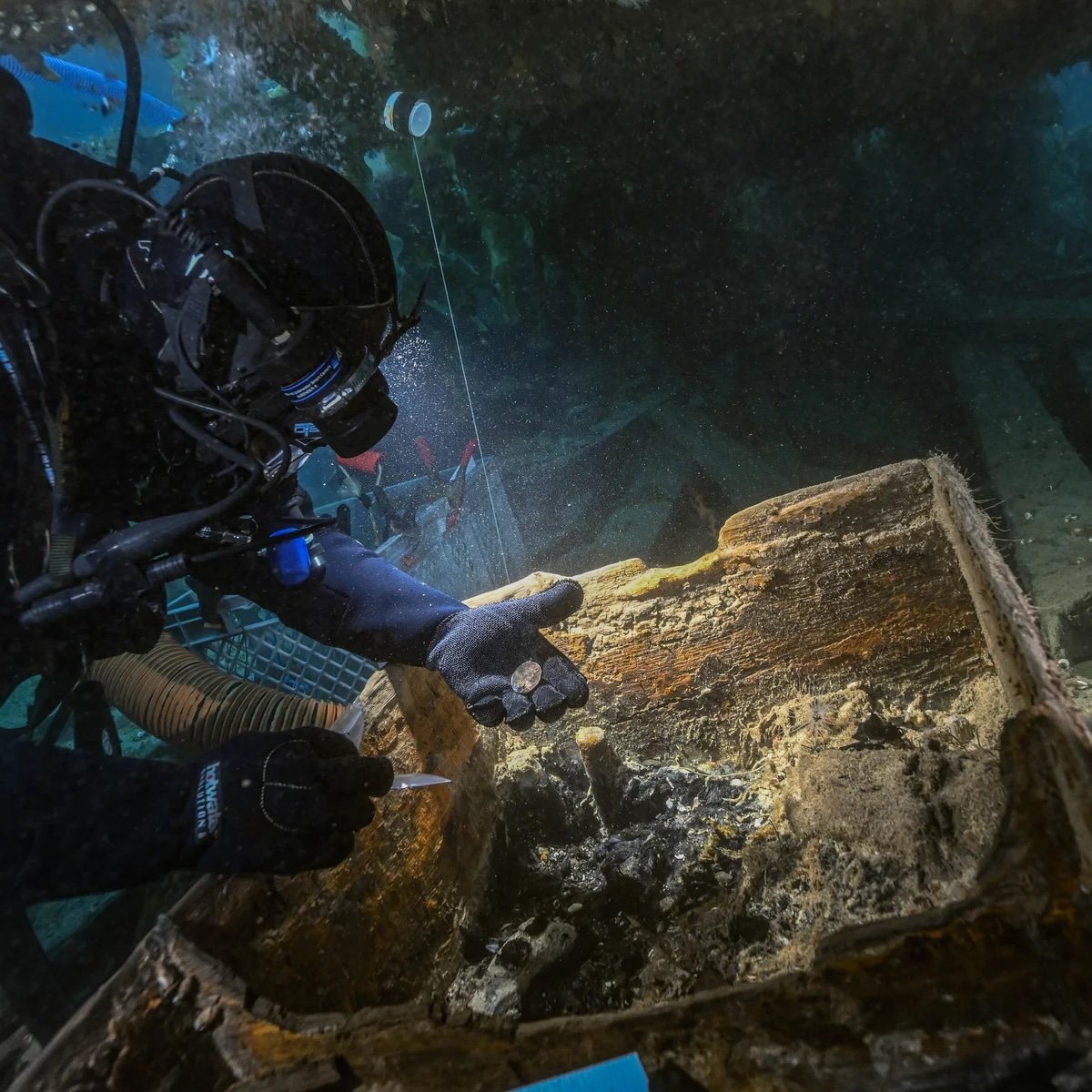
For more than 160 years, Erebus and Terror remained lost. Inuit oral history helped point searchers toward them.
In 2014, Parks Canada found the wreck of HMS Erebus in Queen Maud Gulf. In 2016, the Arctic Research Foundation found HMS Terror in Terror Bay, off King William Island. Both ships were found in areas connected to Inuit knowledge.
The wrecks changed the Franklin story again. The ships had not vanished into abstraction. They were still there, preserved in cold Arctic waters, holding artifacts, structural evidence, damage, and possible answers. Archaeologists have continued studying the wrecks, recovering objects and documenting the interiors. The work is slow because the sites are remote, cold, protected, and difficult to access.
The discoveries also showed the power of Inuit testimony. For generations, Inuit accounts had placed ships, bodies, and objects in the landscape with remarkable accuracy. British searchers often dismissed or filtered those accounts through their own assumptions. The ships were found where Inuit knowledge had pointed.
In 2024, DNA analysis identified remains from the expedition as James Fitzjames, captain of Erebus. His mandible showed cut marks. The identification made the disaster painfully specific. Fitzjames was no longer only a name written in the margin of the Victory Point note. He was one of the men whose bones carried evidence of what happened after the march began.
Francis Crozier has never been found. Some Inuit accounts claimed a leader survived farther south for a time, but that story has never been confirmed. Crozier disappears after the Victory Point note, walking with the remaining men toward the Back River.
What Happened to Franklin’s Men?
Franklin died aboard or near the ships in June 1847. The remaining men stayed with Erebus and Terror until April 1848, then abandoned them under Crozier and Fitzjames. They dragged boats south across King William Island. Some died along the shore. Some died in tents. Some died beside boats. Some may have reached the mainland. None returned to British contact.
The exact order of deaths remains unknown, but the broad shape is clear. The ships entered the Arctic in 1845 with 129 men. 3 men died during the first winter at Beechey Island. Franklin died in 1847. By April 1848, 24 officers and men were dead. 105 survivors left the ships. Every one of them died.
The expedition had sailed with confidence, technology, preserved food, steam engines, reinforced hulls, scientific instruments, and the full weight of the Royal Navy behind it. The Arctic stripped that away piece by piece.
The final traces came back through Inuit testimony, a paper in a cairn, graves on Beechey Island, bones on King William Island, wrecks under cold water, and cut marks that told the part Victorian Britain refused to hear.
Franklin went north to complete the Northwest Passage.
His men never came home.
The ships came back first as rumor, then as wrecks.
The bones told the rest.
Want More?
If you’re drawn to dark history, old folklore, lost places, and unsolved mysteries, my books might be just what you’re looking for.
Start with A Vow for Breaking for Appalachian folk horror, family curses, and a house full of secrets — or A Dark Most Fair for a dark fairy tale about jealousy, longing, and a dangerous bargain with the fey.
Recommended Nonfiction Reading
Michael Palin, Erebus: The Story of a Ship
Gillian Hutchinson, Sir John Franklin’s Erebus and Terror Expedition: Lost and Found
Russell A. Potter, Finding Franklin: The Untold Story of a 165-Year Search
Paul Watson, Ice Ghosts: The Epic Hunt for the Lost Franklin Expedition
Owen Beattie and John Geiger, Frozen in Time: The Fate of the Franklin Expedition
Sources
Beattie, Owen, and John Geiger. Frozen in Time: The Fate of the Franklin Expedition. Greystone Books, 1987.
Keenleyside, Anne, Margaret Bertulli, and Henry C. Fricke. “The Final Days of the Franklin Expedition: New Skeletal Evidence.” Arctic, vol. 50, no. 1, 1997, pp. 36–46.
McClintock, Francis Leopold. The Voyage of the Fox in the Arctic Seas: A Narrative of the Discovery of the Fate of Sir John Franklin and His Companions. John Murray, 1859.
Palin, Michael. Erebus: The Story of a Ship. Greystone Books, 2018.
Parks Canada. “Wrecks of HMS Erebus and HMS Terror National Historic Site.” Government of Canada.
Potter, Russell A. Finding Franklin: The Untold Story of a 165-Year Search. McGill-Queen’s University Press, 2016.
Rae, John. “Dr. Rae’s Report to the Secretary of the Admiralty.” 1854.
Stenton, Douglas R., et al. “DNA and Genealogical Analyses of Franklin Expedition Human Remains.” Journal of Archaeological Science: Reports, 2021.
Stenton, Douglas R., et al. “Identification of a Senior Officer from Sir John Franklin’s Northwest Passage Expedition.” Journal of Archaeological Science: Reports, 2024.
Woodman, David C. Unravelling the Franklin Mystery: Inuit Testimony. McGill-Queen’s University Press, 1991.